Skip to content
Pool cleaning is the backbone of any healthy backyard pool, skip it, and that investment turns into an algae farm faster than most new owners expect. Many homeowners consider a backyard pool one of the most rewarding upgrades they can make to their home, but consistent upkeep is what keeps it that way. Neglect the routine, and a pool that looks fine on Monday can develop a significant algae problem within days, with remediation costs that vary widely depending on severity. This guide gives you a complete playbook: how often to clean, what the weekly routine looks like, which tools and chemicals to stock, and how to fix the problems that catch every pool owner off guard. If you’d rather hand this off to a pro, Noah’s Pool Service in the DFW area has made reliable weekly pool care surprisingly accessible, with plans starting at $23 a week. Here’s exactly what consistent pool maintenance requires.
How often your pool actually needs cleaning
Daily, weekly, and monthly task breakdown
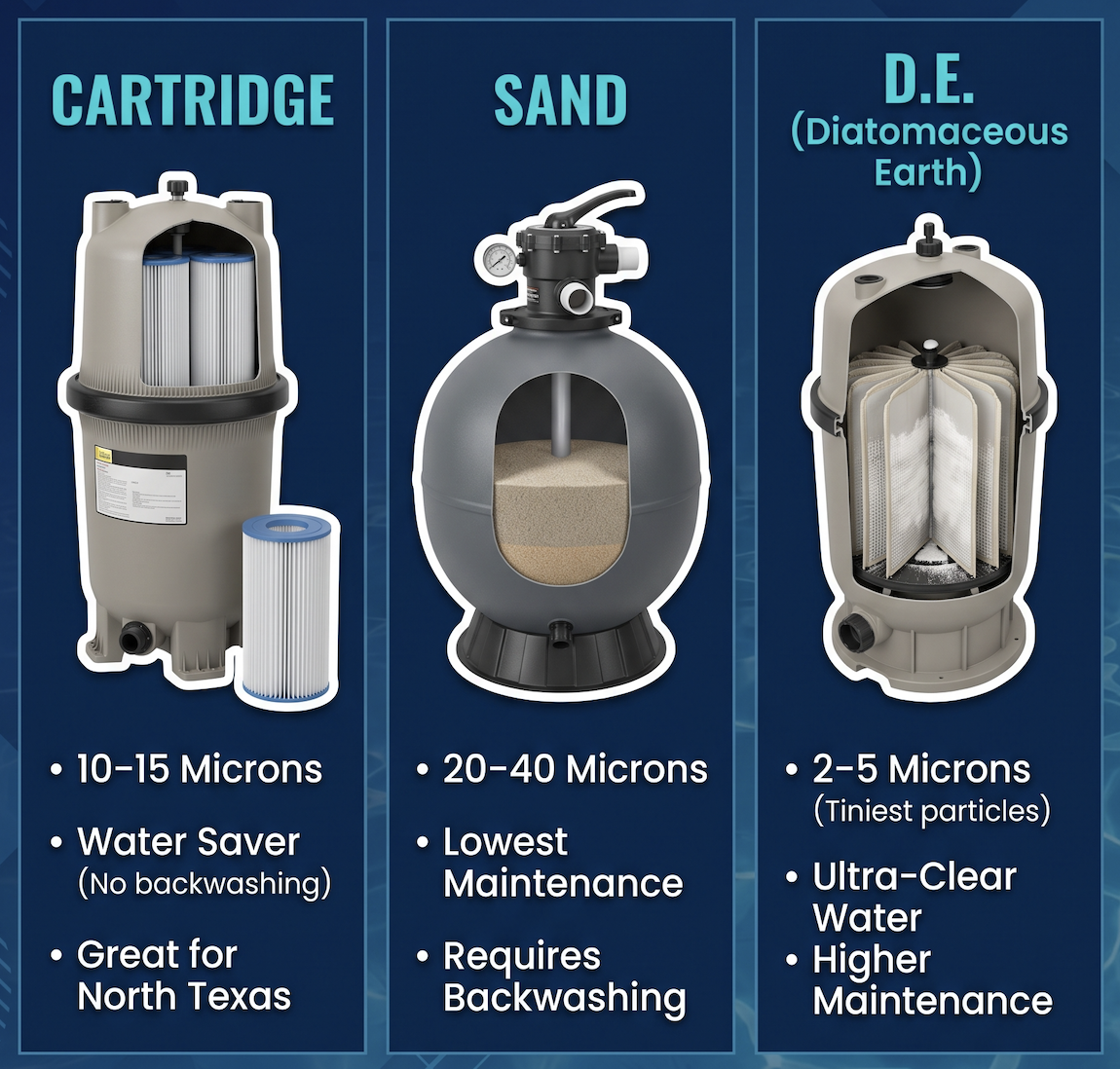
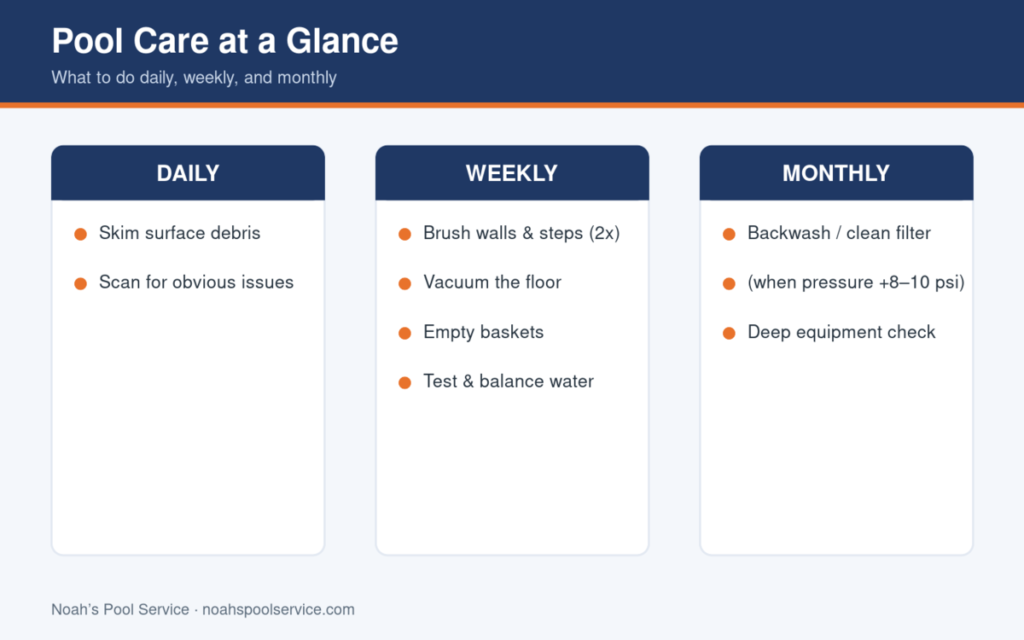
Pool care runs on three timelines, and knowing which tasks belong to which timeline is the foundation of everything else. Daily, you skim the surface to pull out leaves, bugs, and debris before they sink and decompose. Weekly, you vacuum the floor, brush the walls and steps at least twice, test your water chemistry, and adjust chemicals. Monthly, or whenever your filter pressure gauge climbs 8 to 10 psi above its baseline reading, you backwash the sand filter or rinse the cartridge filter. Following this rhythm keeps each session short and your pool consistently swim-ready.
The numbers matter here. Brush twice a week, not once. Vacuum at least once a week, and twice for pools with heavy bather loads or lots of nearby trees. Skim every single day if you can, especially during Texas summers when organic debris hits the water fast and UV light degrades your chlorine quickly.
What happens when you fall behind the schedule
In hot, high-debris conditions like a DFW summer, even a week’s neglect can risk an algae bloom. Heat accelerates chlorine degradation, debris adds phosphates (algae’s favorite food source), and without consistent brushing, algae spores embed into your walls and steps. What starts as a minor chemical imbalance can become a remediation project lasting anywhere from one to seven days, depending on severity, that costs significantly more in chemicals and time than a steady weekly routine ever would. Consistency isn’t about being obsessive; it’s about keeping corrections small and manageable.
What your weekly pool cleaning routine covers
The step-by-step maintenance sequence
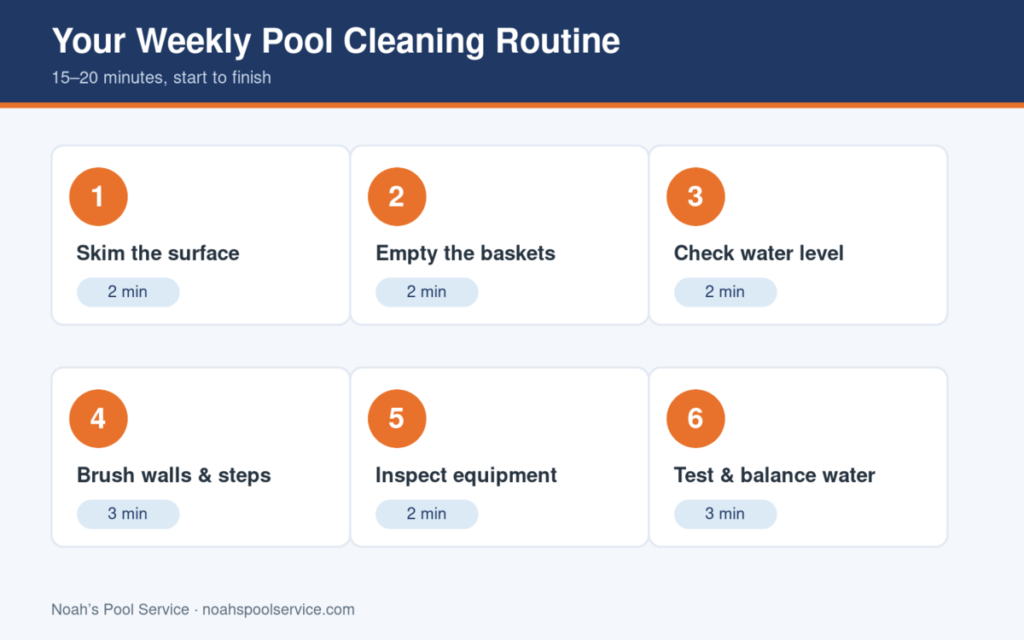
A well-organized weekly session takes 15 to 20 minutes. Start by skimming the surface for about two minutes to clear floating debris. Then empty the skimmer basket and pump basket, rinsing both with a hose. Spend one minute checking the water level (it should sit halfway up the skimmer opening) and another minute verifying the skimmer’s weir door flap moves freely. A stuck weir door kills suction and lets debris back into the water.
Next, spend three minutes brushing the walls, steps, and corners, working from the waterline down toward the floor. Finish with a two-minute equipment inspection, look for leaks, puddles, or unusual pump noise, and three minutes of chemical testing and adjustment. That’s your core 15 minutes covered. A full manual vacuum can add anywhere from 15 to 45 minutes on top depending on pool size and condition, or you can run a robotic cleaner in the background while you handle the other steps.
Chemical testing and balancing targets
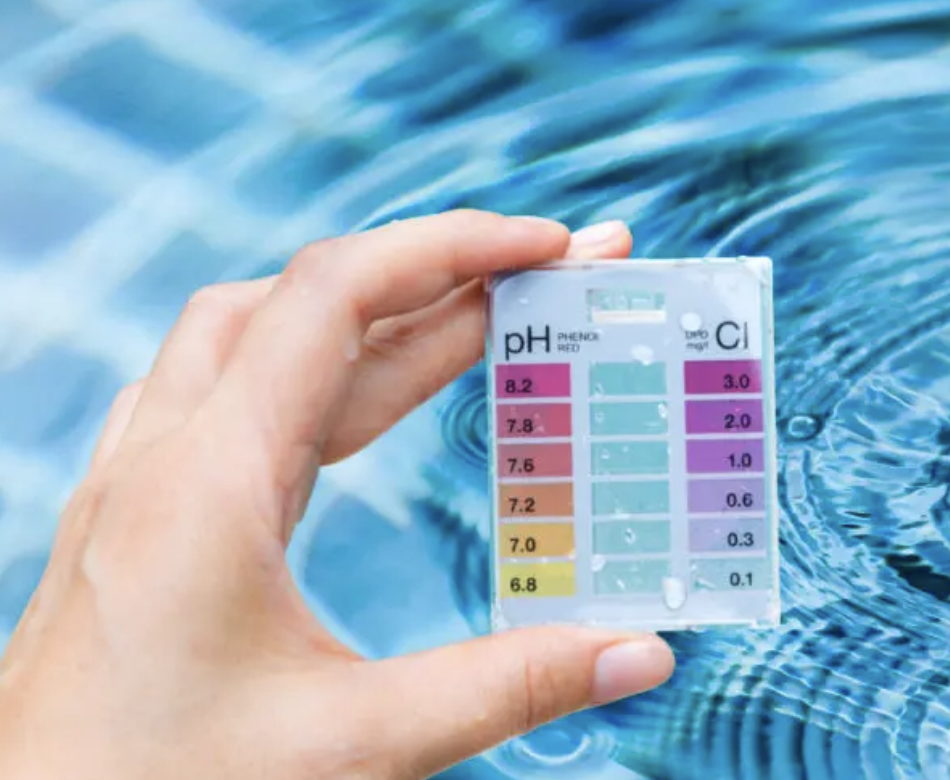
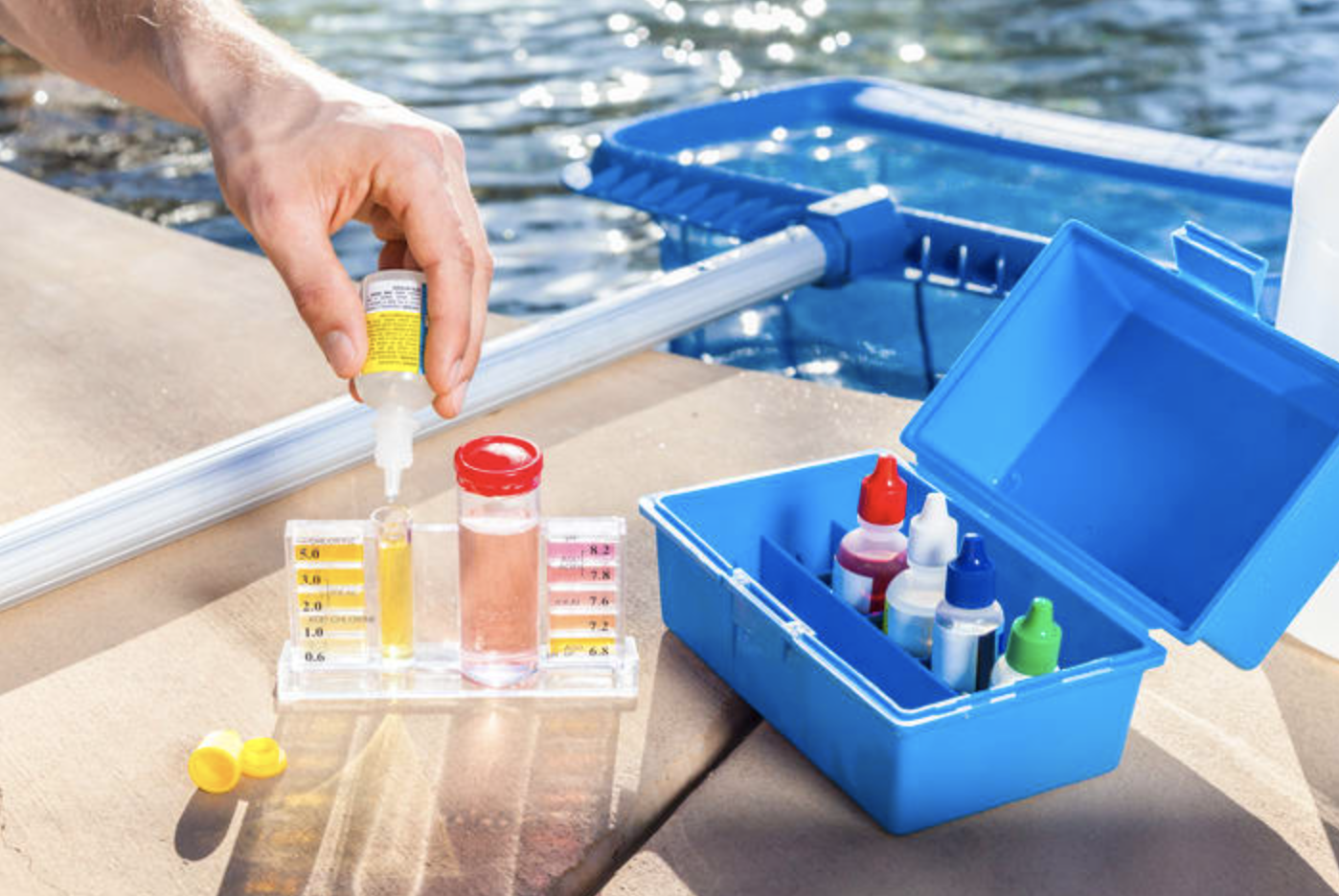
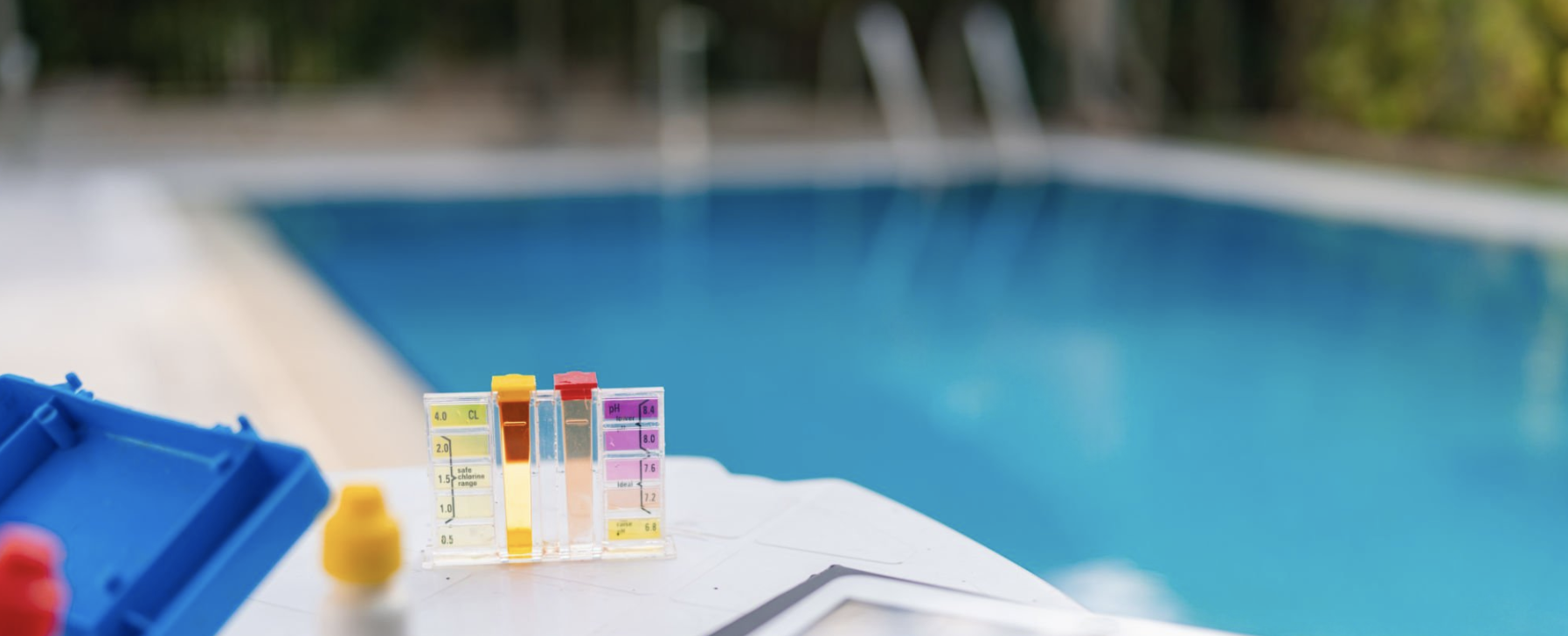
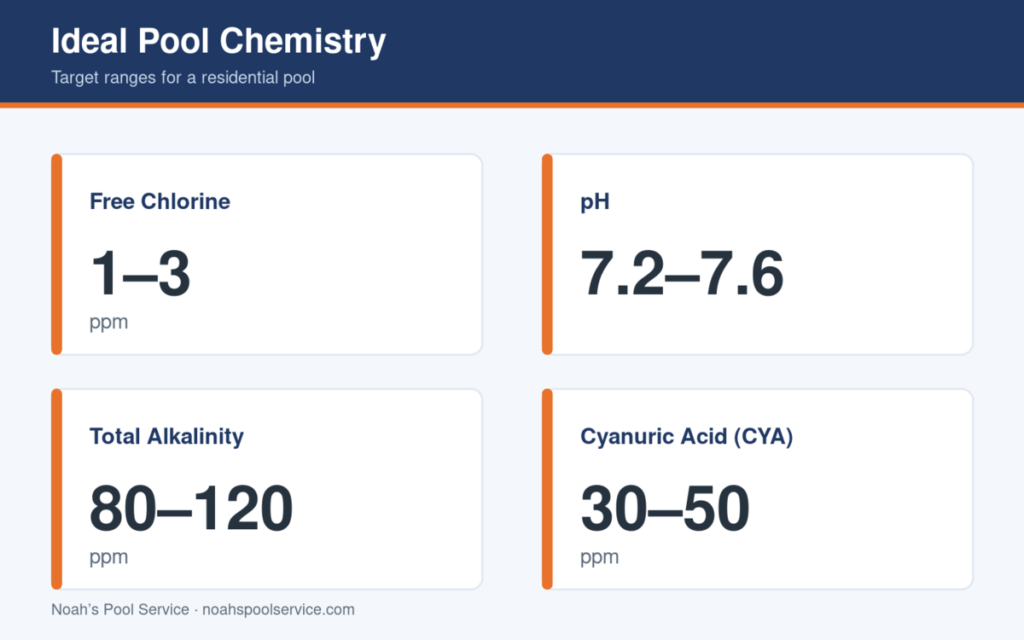
Keeping your water chemistry in range is what actually protects swimmers and prevents algae. The targets for a residential pool are straightforward: free chlorine at 1 to 3 ppm, pH at 7.2 to 7.6, total alkalinity at 80 to 120 ppm, and cyanuric acid (CYA, the stabilizer) at 30 to 50 ppm. When chlorine drops below 1 ppm, algae can grow quickly in summer heat, sometimes within a short time if conditions are right. When pH drifts below 7.2, the water irritates eyes and skin. When CYA climbs above 50 ppm, your chlorine loses effectiveness and you end up adding more chemical while getting less protection. Test weekly, adjust incrementally, and never skip this step.
The tools and chemicals every pool owner needs
Essential manual tools for any pool size
Every pool owner needs five core tools: a telescoping pole, a pool brush, a skimmer net, a leaf rake, and a manual vacuum head with an appropriately sized hose. Choose aluminum or fiberglass poles for lightweight durability. For your brush, use nylon bristles on vinyl and fiberglass surfaces and stainless steel on plaster or concrete. A leaf rake is non-negotiable if you have trees near the pool; the standard flat skimmer net won’t move large volumes of debris efficiently. This combination handles any residential pool on any budget and forms the foundation of every cleaning session, whether you add automation later or not.
Automatic cleaners and when they’re worth it
There are three types of automatic pool cleaners: suction-side (lowest cost, roughly $100 to $300), pressure-side ($200 to $500), and robotic ($300 to $1,000 or more). For small to medium backyard pools, robotic cleaners deliver a strong balance of automation and cleaning power because they work independently of your pump and filter system. For pools with heavy debris loads from surrounding trees, a quality leaf rake paired with a suction-side cleaner covers most situations at a lower upfront cost. Match the tool to your pool’s actual conditions, not to the marketing on the box, and you’ll avoid overspending on features you don’t need. For recommendations on robotic units suited to smaller pools, see this guide to the best robotic pool cleaners for small pools: best robotic pool cleaners for small pools.
How to fix green water, cloudy pools, and stubborn stains
Identifying the severity of an algae bloom
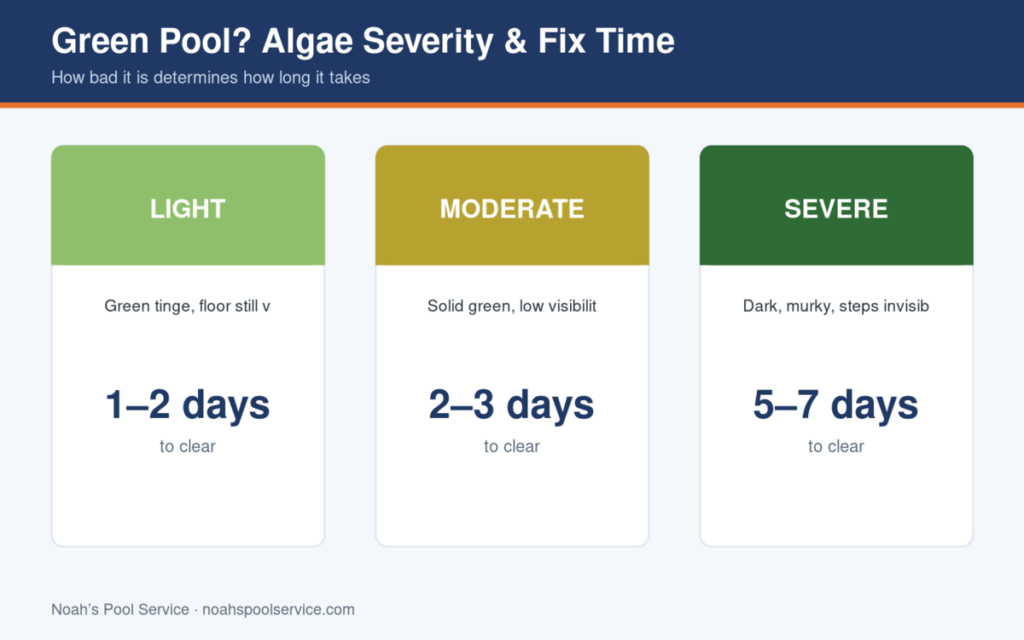
Algae blooms fall into three levels, and the severity determines how much time and chemical you’ll need. A light bloom gives the water a green tinge but the pool floor is still visible; figure on a one to two day fix. A moderate bloom turns the water solid green and visibility drops to less than 50 centimeters; plan for two to three days. A severe bloom makes the water dark green and murky, with steps completely invisible; treatment can take five to seven days, though timelines vary depending on pool size, circulation, and how aggressively you treat it. One important distinction: if the surface looks like it’s been dipped in paint, that could be toxic blue-green algae, not the ordinary green algae you usually see. Avoid contact, and call a professional before treating it yourself.
The shock-and-algaecide treatment method
Start by aggressively brushing every surface, walls, steps, corners, and behind ladders, to dislodge algae before the chemical treatment begins. Then check your CYA level (target 30 to 50 ppm) and phosphate levels (target under 100 ppb); both high CYA and high phosphates block chlorine from doing its job. Next, shock the pool to 30 ppm free chlorine using calcium hypochlorite. For a standard 15,000-gallon pool with moderate algae, that’s roughly 5 to 6 pounds of shock, applied at dusk so UV light doesn’t destroy it before it works. For a primer on how much chlorine to add and best practices for dosing shock safely, see this beginner’s guide to chlorine dosing: how much chlorine to add to a pool.
Run the pump continuously for 24 hours, clean the filter baskets, and backwash the filter after treatment to clear out the dead algae. Follow up with a weekly algaecide dose (per product directions) to help prevent regrowth. If the pool remains green after treatment, there are specific troubleshooting steps and follow-ups to check; learn what to do if your pool is still green after shock and algaecide here: pool still green after shock and algaecide. If your pool battles black algae year after year embedded in rough plaster, that situation likely requires a professional acid wash to fully resolve; this is a job best left to a licensed contractor.
What professional pool cleaning actually includes
What a technician does on a typical weekly visit
A standard professional visit covers testing and balancing water chemistry, applying disinfectants, skimming and netting the surface, brushing walls and steps, emptying the skimmer and pump baskets, vacuuming the floor, inspecting equipment for leaks or pressure issues, and performing filter maintenance. A typical visit for a standard residential pool runs 20 to 40 minutes. Professional technicians work faster because they’re trained to catch problems early. A failing pump seal, rising phosphate levels, or an early-stage algae bloom that a homeowner might miss on a Saturday afternoon is something an experienced tech spots and flags before it turns into an expensive fix or a week-long remediation project.
Understanding tiered service plans
Tiered plans let you match your service level to your actual budget and needs, rather than paying for a one-size-fits-all package. Noah’s Pool Service is a useful model for how this works in practice. Their Chemical Only plan at $23 a week covers water testing and chemical balancing. The Select plan at $30 a week adds brushing, skimming, and basket cleaning. The Signature plan at $40 a week includes full vacuuming, netting, filter backwashing, and cartridge maintenance. Use that structure as your benchmark when comparing any local provider’s offerings. If a company’s “basic” plan skips brushing entirely, that’s a red flag worth paying attention to. For a quick look at the kinds of Pool Cleaning Services offered and how providers structure plans, see their service offerings here: Pool Cleaning Services | Noah’s Pool Service.
How to choose a pool cleaning service that delivers
Questions to ask before signing with any provider
Before committing to any pool service, ask these questions directly: Do they offer tiered plans so you pay only for what you need? Do they provide a written service schedule and show up within a reliable window? Are their technicians insured and background-checked? Can they handle algae remediation if your water quality drops? What happens if you’re not satisfied after the first month? A provider who hesitates on any of these questions is telling you something worth hearing. The homeowners who get burned by unreliable pool services are almost always the ones who skipped these conversations upfront.
Guarantees and pricing that signal a trustworthy company
A credible pool cleaning service stands behind its work with specific, written guarantees, not vague promises of “quality service.” Look for guarantees that cover cleaning results, water balance, and algae prevention, along with a clear policy if you’re unsatisfied in your first month. Noah’s Pool Service offers written service guarantees across their plans, so you know exactly what you’re getting before you sign anything. Use that kind of transparency as your benchmark. Any provider worth hiring should be willing to put their commitment in writing and show up reliably, not just collect a check and move on.
Keep your pool cleaning routine working for you all season
Consistent pool maintenance is what separates a backyard you enjoy all season from one you’re constantly fighting. The core pillars are simple: stick to a realistic weekly routine, keep your chemical targets in range, address algae and cloudiness fast before they compound, and know what quality professional service looks like so you can recognize it when you see it. None of this requires being a chemistry expert. It just requires showing up on schedule.
For DFW homeowners who’d rather spend their weekends in the pool instead of cleaning it, Noah’s Pool Service offers a straightforward starting point. Tiered plans with clear guarantees and a team that actually shows up make handing off your pool cleaning a simple decision. For additional step-by-step guidance, check out Noah’s Pool Tips. Get a custom quote today or explore which plan fits your pool at Noah’s Pool Service, and head into this season knowing your water will be balanced and swim-ready every single week.
Frequently Asked Questions
How often should I clean my pool?
Pool care runs on three timelines. Skim the surface daily, then each week vacuum the floor, brush the walls and steps at least twice, and test and balance the water. About once a month — or whenever filter pressure climbs 8–10 psi above its baseline — backwash or clean the filter.
What does a weekly pool cleaning routine include?
A well-organized weekly session takes about 15–20 minutes: skim the surface, empty the skimmer and pump baskets, check the water level, brush the walls and steps, inspect the equipment, and test and balance the chemistry. Add a manual vacuum (15–45 minutes) or run a robotic cleaner as needed.
What are the ideal chemical levels for a residential pool?
Aim for free chlorine of 1–3 ppm, pH of 7.2–7.6, total alkalinity of 80–120 ppm, and cyanuric acid (CYA) of 30–50 ppm. Test weekly and adjust in small increments — letting chlorine fall below 1 ppm or CYA climb above 50 ppm is what lets algae take over.
What pool cleaning tools do I actually need?
Five core tools handle any residential pool: a telescoping pole, a pool brush, a skimmer net, a leaf rake, and a manual vacuum head with a properly sized hose. Automatic cleaners (suction, pressure, or robotic) are optional — robotic units are a great fit for small to medium pools.
How do I get rid of green, algae-filled water?
Test and balance first (especially CYA and phosphates), brush every surface, then shock the pool to about 30 ppm free chlorine at dusk. Run the pump continuously for 24 hours, clean or backwash the filter, and follow up with algaecide. Ordinary green algae usually clears in one to three days.
Is it worth hiring a professional pool cleaning service?
For many homeowners, yes — a pro keeps the water balanced, catches equipment or algae problems early, and gives you your weekends back. Look for tiered plans so you pay only for what you need; Noah’s Pool Service offers weekly plans starting at $23 for chemical care up to full-service.