Skip to content

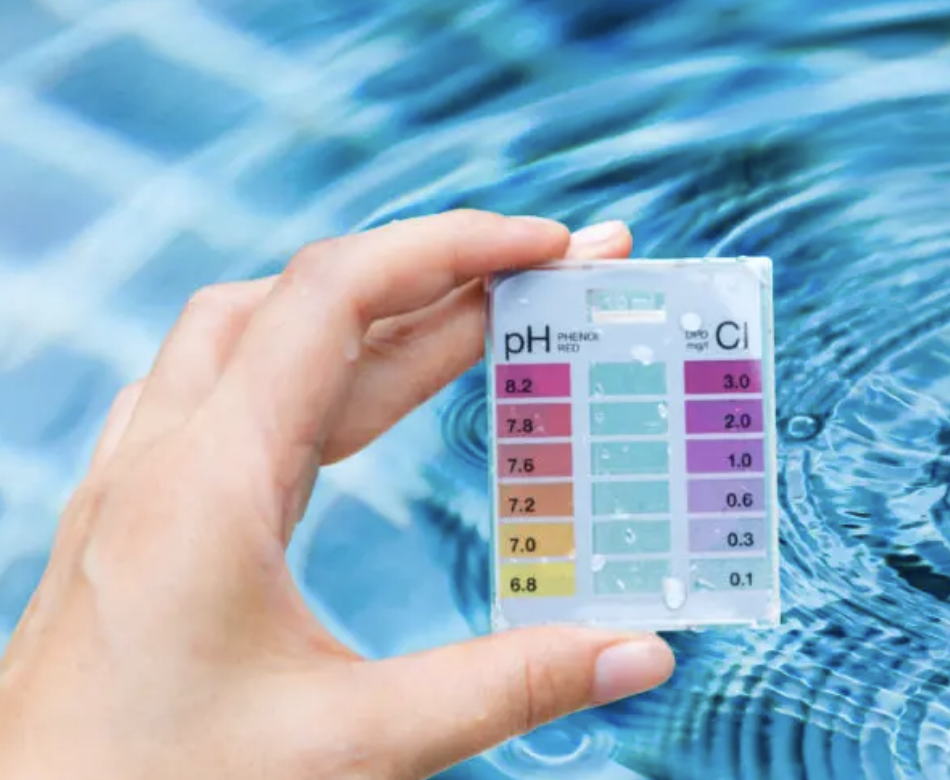
Test your pool water at least once a week, on the same day, all year. During peak summer heat, after heavy rain, after a party, or while treating a problem, test twice a week. Weekly testing catches chlorine and pH drift before you can see it, and algae starts growing inside your filter, where it is dark, warm, and full of food, long before the water turns. If you cannot test for a stretch (travel, a busy month), have someone else do it; the pool does not take the week off.
Ask Noah for the single most important rule of pool care and he will not name a product. He will say consistency. Here is the rule, and the reasoning behind it.
The weekly baseline
Once a week is the minimum for a residential pool in North Texas, and it should be the same day every week so it becomes automatic. A weekly test should read at least:
- Free chlorine
- pH
- Total alkalinity
- Cyanuric acid (stabilizer) at least monthly
- Calcium hardness at least monthly, more often with our hard water
- Salt level if you have a salt system
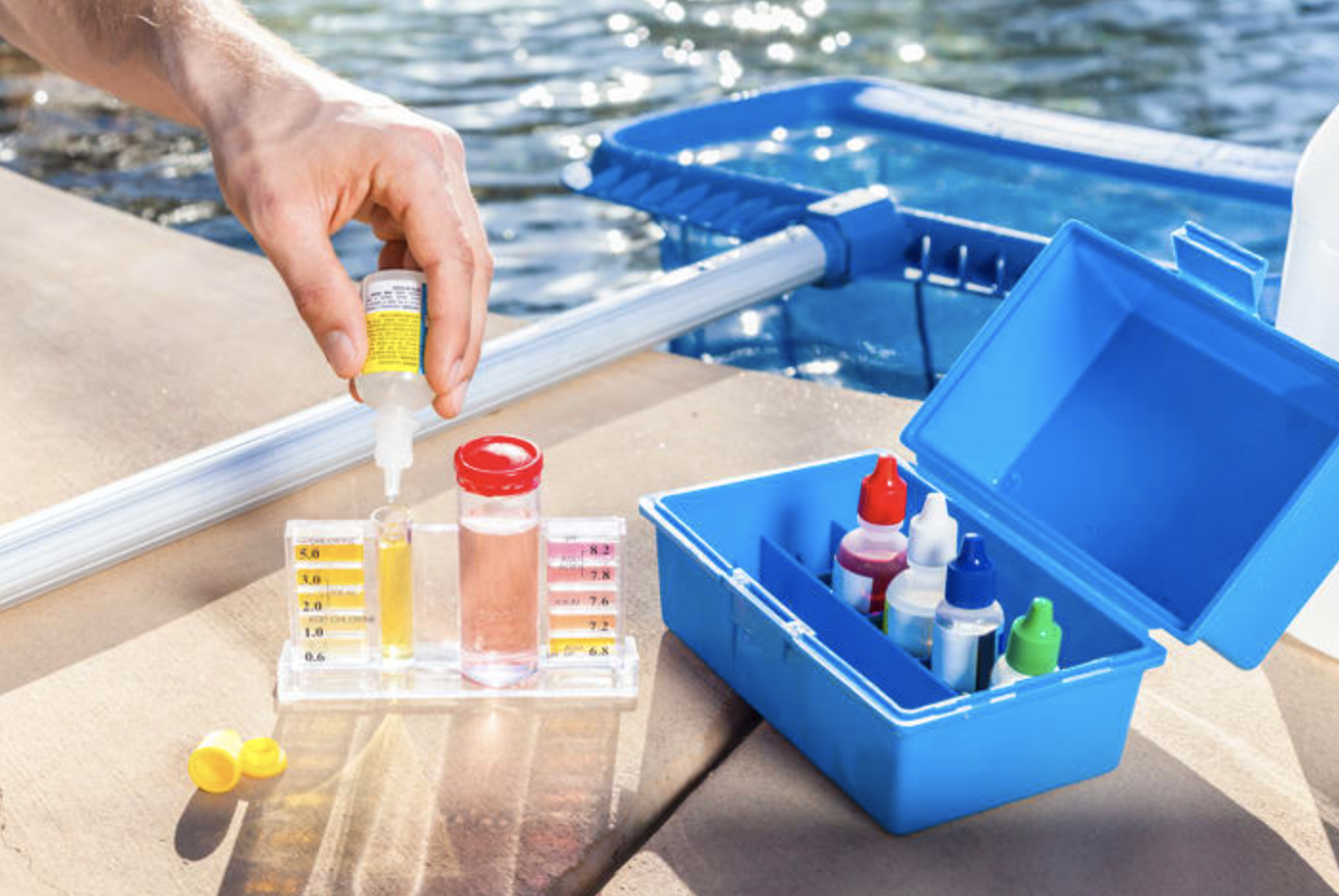
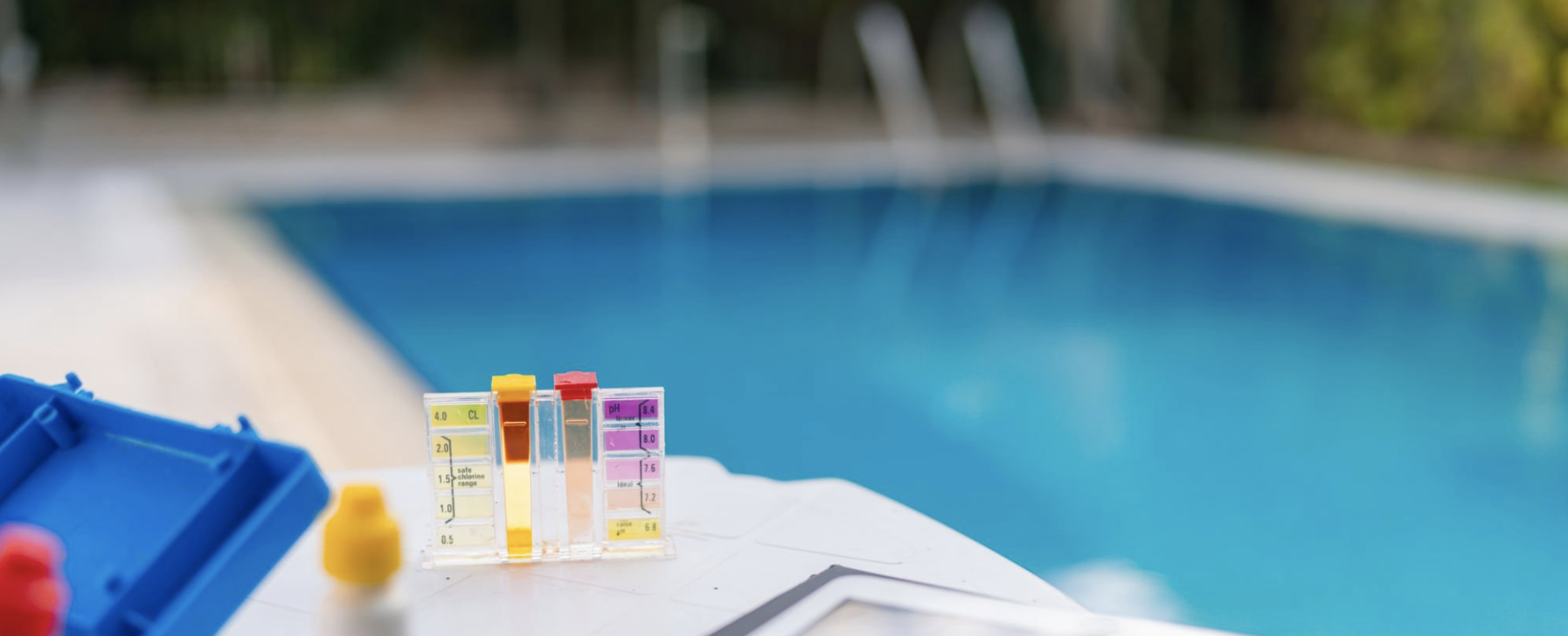
That takes a few minutes with a drop kit or strips. The adjustments you make afterward are small because you caught the drift early. Skip two weeks and the same adjustments become large, expensive, and stressful.
When to test more than once a week
- Heat waves. Chlorine burns off faster above roughly 90°F, and pools in Fort Worth live there for months.
- After rain. Storms dilute chlorine, drop pH, and wash in debris and phosphates.
- After heavy use. Parties and weekend swim marathons load the water with sweat, sunscreen, and organics.
- While fixing a problem. Green, cloudy, or scaling water needs readings every couple of days until it stabilizes.
- Right after opening or refilling. New water needs a few tests to settle.
Why weekly beats waiting for cloudy water
Most homeowners test when the water looks off. By then the chemistry has been wrong for days, and the problem has had time to grow.
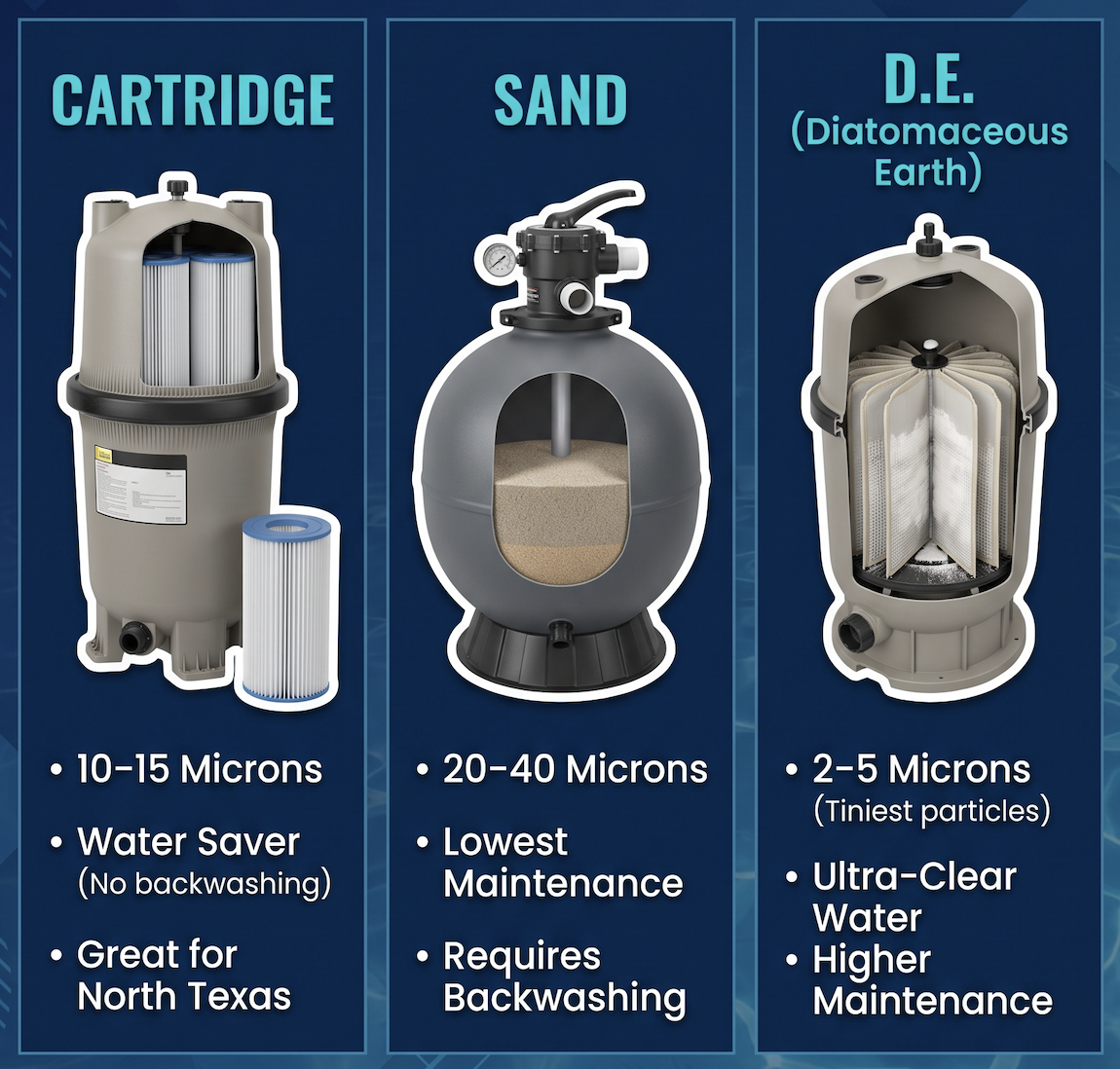
Algae is the clearest example. It does not start in the middle of the pool where you can see it. It starts inside the filter and in the shaded corners and behind the light, where it is dark, warm, and full of the fine organic material the filter collected. By the time green shows up in open water, the filter is already seeded and every dose of chlorine you add is fighting a colony you cannot see. Weekly testing keeps chlorine high enough, consistently enough, that the colony never gets started.
The same logic applies to pH and alkalinity. A slow drift downward etches plaster and corrodes equipment; a slow drift upward drops calcium scale on your tile. Neither is visible until damage is done, and both show up on a weekly test long before that.
Consistency beats intensity
A pool that gets tested and lightly adjusted every Saturday will look better and cost less to run than a pool that gets ignored for three weeks and then hammered with shock and acid. Big corrections stress the water, stress the equipment, and stress the owner. Small, regular corrections keep everything in range.
This is the whole reason weekly service exists as a category. It is not that the work is hard. It is that it has to happen every week, without exception, and most households cannot promise that.
What to do when you cannot test (travel, busy stretches)
The pool does not know you are on vacation. If you will miss a week or more in warm weather:
- Test and balance right before you leave, and get chlorine to the top of its range.
- Make sure the chlorinator or floater is full and the pump schedule is long enough.
- Ask a neighbor or family member to check chlorine mid-week with strips.
- Or schedule a professional visit for the weeks you are away.
Coming home to a green pool after a two-week trip is one of the most common calls we get every summer, and it is completely avoidable.
Make it easy on yourself
Keep the test kit somewhere cool, dark, and visible so it reminds you. Replace reagents about yearly. Write readings down so you can see trends. And if weekly testing is the part of pool ownership you keep skipping, that is the part weekly service is built for: a trained technician tests, balances, and documents your water every single week, and you get the readings in writing.
Call or text 817-269-4520 for a quote from satellite imagery, no appointment needed.
Frequently asked questions
How often should you test pool water?
At least once a week, on the same day, year-round. Test twice a week during summer heat, after heavy rain or heavy use, and while correcting a water problem.
What should you test pool water for every week?
Free chlorine, pH, and total alkalinity every week; cyanuric acid and calcium hardness at least monthly; and salt level if you have a salt system.
Why does my pool turn green even though I add chlorine?
Usually because chlorine levels were inconsistent. Algae starts inside the filter and in shaded spots before it is visible, and once established it consumes chlorine faster than occasional dosing can replace it. Weekly testing keeps chlorine consistent enough to prevent it.
Can you test pool water too often?
No. Testing more often only costs a little reagent. The risk runs the other way: testing too rarely lets problems grow before you notice them.
What should I do with my pool when I go on vacation?
Test and balance before you leave, fill the chlorinator, run the pump long enough, and have someone check chlorine mid-week or schedule a professional visit. Warm-weather pools left untested for two weeks often come back green.