Skip to content

When homeowners ask about pool service, what to include, what’s fair to expect, and what separates a complete service from a partial one, the answers are rarely spelled out upfront. Most homeowners hire a provider, get a price, and assume the rest takes care of itself. Then summer arrives, the pool turns green, and the next invoice shows a $75 “specialty chemical surcharge” nobody mentioned. Many homeowners report this gap between expected and actual service as one of the most common frustrations in pool ownership. A good service provider closes that gap before the first visit. A bad one hopes you never think to ask.
This article gives you a complete pool maintenance checklist of what a professional pool service should cover every single week. Use it to evaluate any provider you’re considering, to audit your current service, or to understand why your contract should say more than just “pool cleaning, $X per month.” By the end, you’ll know exactly what to look for, what to ask, and how to recognize a genuinely complete service when you see one.
Pool service: what to include, core cleaning tasks every visit
The physical, hands-on cleaning work is the most visible part of any service visit, and it’s where you can often tell whether a technician is doing the job right or just going through the motions. These tasks represent standard weekly practice, though some steps may vary slightly based on your equipment or pool condition.
Skimming the surface and clearing baskets
Surface skimming with a leaf net is the first task of every visit. A thorough technician covers the entire water surface, not just the area near the skimmer mouth where debris tends to collect. After skimming, both the skimmer basket and the pump strainer basket need to be emptied and rinsed. Restricted baskets reduce water flow, strain the pump motor, and can cause equipment damage over time. It’s a quick task that can prevent a costly pump repair down the line.
Brushing walls, steps, and the waterline
Brushing isn’t optional maintenance you schedule when the pool looks bad. It’s a prevention step that stops biofilm and algae from establishing on surfaces before they become visible problems. The right brush matters: nylon bristles for fiberglass and vinyl surfaces, stiffer nylon or stainless for plaster. A technician who skips brushing is handing algae a head start.
Vacuuming the pool floor
Manual vacuuming and resetting an automatic cleaner are not the same task, and a professional technician should know the difference. Manual vacuuming “to waste”, bypassing the filter, is the right call when heavy debris or early algae is present, because sending that material through the filter just spreads the problem. For normal conditions, vacuuming to the filter is standard. If a pool has a robotic cleaner that ran recently, manual vacuuming may not be needed at every visit. If a technician can’t explain which method they use and why, that’s worth asking about.
Water chemistry: what’s actually included in the price
This is where homeowners most often get surprised. “Chemicals included” means very different things depending on the provider. Understanding what tests a technician should run and which chemicals belong in the base rate versus a separate invoice is essential before you sign anything.
The tests your technician should run every week
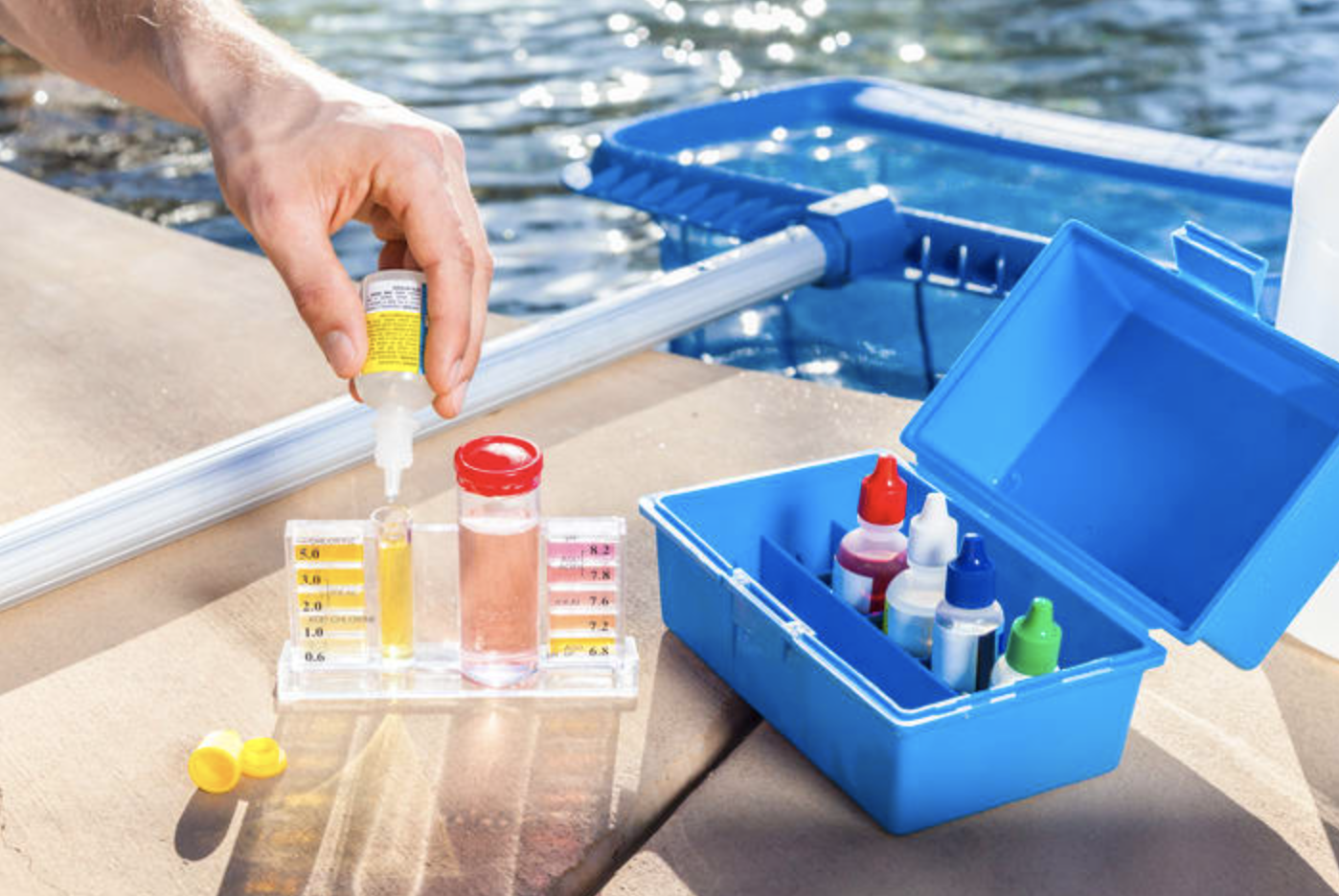
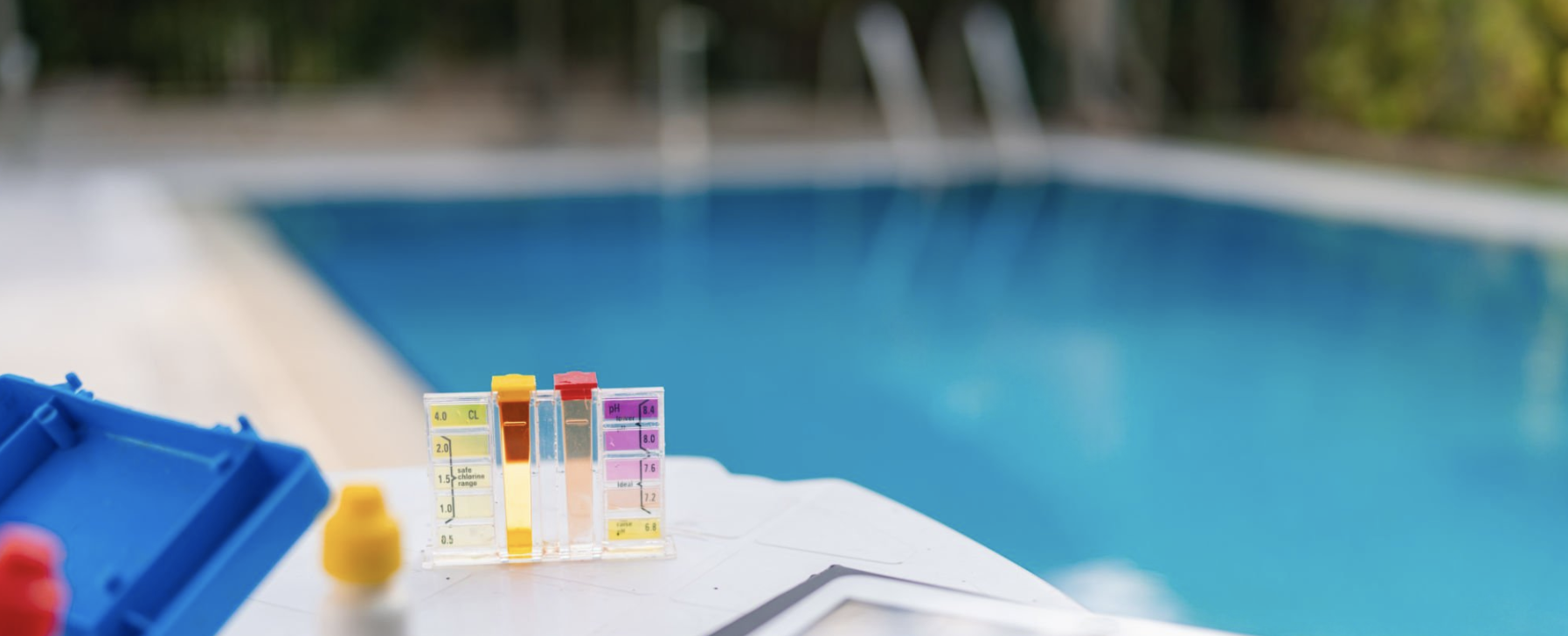
A complete weekly chemistry check covers free chlorine, pH, and total alkalinity as the core parameters. For salt pools, salt levels should also be checked weekly. Calcium hardness and cyanuric acid are typically tested monthly rather than every visit. These readings should be documented, a technician who tests but doesn’t record isn’t giving you anything to work with if something goes wrong. Ask your provider how they log and report chemistry results at each visit.
Standard chemicals vs. specialty add-ons
A solid base service rate typically covers liquid chlorine, muriatic acid, sodium bicarbonate, and stabilizer (cyanuric acid). These are the routine chemicals used to maintain water balance week to week. What gets billed separately are the specialty items: algaecides, phosphate removers, metal sequestrants, clarifiers, and enzyme treatments. These products address specific problems rather than routine maintenance, and they shouldn’t show up on your invoice without a prior conversation. Ask any provider to put their chemical policy in writing before the first visit.
Equipment checks that protect your investment long-term
Cleaning the water is half the job. A professional technician should also walk the equipment pad every visit to catch small issues before they become expensive failures. Most homeowners don’t realize this should be part of what they’re paying for, which is exactly why so many service contracts leave it out.
Pool service equipment checks: pump, filter, and water level
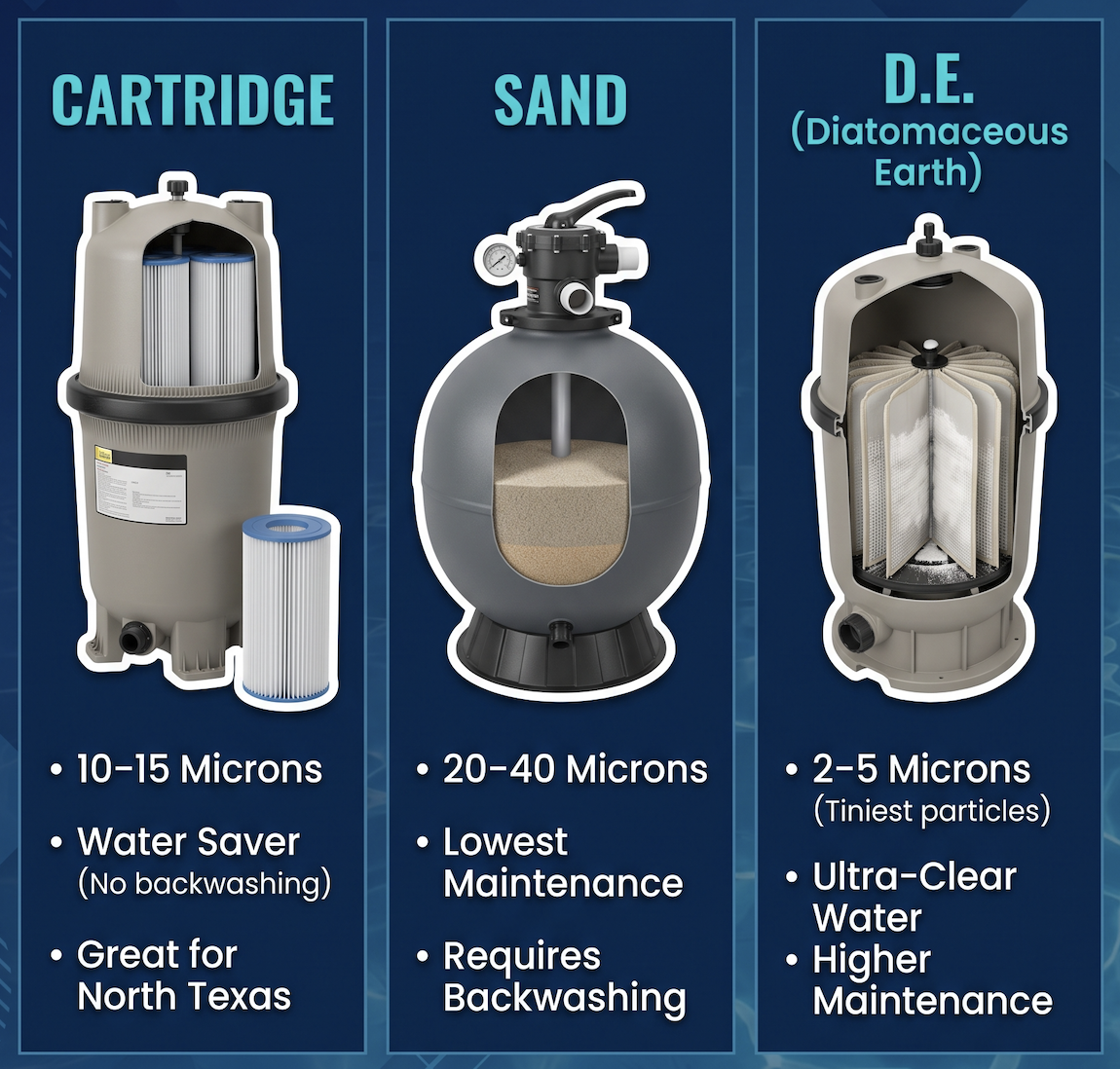
Every visit should include a pressure gauge check on the filter. A reading 8 to 10 psi above the clean baseline means it’s time to backwash or clean the filter, and missing that signal leads to reduced flow and premature wear. The technician should also check the pump basket, listen for unusual motor sounds, and verify the water level is sitting at mid-skimmer. Low water starves the pump; high water reduces skimmer efficiency. These checks take minutes and help prevent damage that can cost hundreds to fix.
Heater, automation, and a brief safety walkthrough
A visual heater check looks for error codes, leaks, soot, and scale buildup on gas heaters, plus fan operation and thermostat accuracy on heat pumps. Automation inspection means verifying timer schedules, relay function, and GFCI breaker status. Some lower-tier providers may treat these as premium add-ons rather than standard practice, but they’re basic due diligence, not extras. A technician who provides a brief service report or photo log documenting these checks at each visit is operating at a professional standard. That’s worth asking for specifically when you compare providers.
What a written service agreement should spell out
A verbal promise and a signed contract are very different things. Before you schedule your first visit, a written agreement should define exactly what you’re getting, what it costs, and what happens if something goes wrong. Vague language in a service contract almost always favors the provider.
Scope of work, service frequency, and guarantee language
A solid contract lists every task performed at each visit, defines the service day window, and includes a clear policy for missed visits due to weather or holidays. It should also include guarantee language that’s specific and written, not a vague reassurance. As an example of what this can look like in practice, Noah’s Pool Service backs every plan with written guarantees: a 30-day satisfaction guarantee, a water balance guarantee, and an algae-free guarantee. High-quality providers may offer similar written commitments, and those are the terms worth looking for in any service agreement you sign.
Pricing structure, chemical policy, and termination terms
The contract should clearly state the base weekly or monthly rate, specify which chemicals are included versus billed as pass-through costs, and explain how billing works. Termination notice requirements, 30 days written notice is a widely used industry standard, and early cancellation language are non-negotiable items to read before signing. You should also confirm that your provider carries liability insurance and workers’ compensation coverage; a reputable company will supply proof without hesitation. If a provider balks at putting any of this in writing, that’s a clear signal about how disputes will go later. Review these terms before your first payment clears.
Pool service pricing and add-on fees to watch for
Understanding what a fair market rate looks like helps you recognize both a genuine deal and an inflated quote. It also helps you spot fees that should have been disclosed upfront but weren’t.
What weekly service rates typically cover in the U.S.
According to industry surveys, national averages for full-service weekly pool maintenance run $150 to $350 per month, with significant variation by region. In the DFW market, a complete cleaning and chemical package typically runs $150 to $250 per month for a standard residential pool in 2026. Noah’s Pool Service’s Signature plan at $40 per week, roughly $160 to $173 per month depending on whether the billing month spans four or five service weeks, covers every task outlined in this article: skimming, brushing, vacuuming, basket cleaning, full chemical balancing, and equipment checks. That’s a concrete DFW benchmark for comparison rather than a vague range with no reference point.
Add-ons and fees that should be disclosed before service starts
Common add-on costs vary widely and should appear in your contract before you sign. Seasonal opening and closing services typically run $150 to $600 each. Green pool cleanup ranges from $200 to $800 depending on severity. An acid wash for severe staining or algae runs $250 to $500. Specialty chemical surcharges like phosphate removers and algaecides often add $20 to $90 per month when needed. None of these should be a surprise on your first invoice. Any provider worth hiring will list these explicitly and explain when they apply.
Putting it all together: your pool service checklist before you hire
A complete pool service covers three categories of work at every visit.
- Physical cleaning: Skimming the surface, emptying skimmer and pump baskets, brushing walls and steps, and vacuuming the floor.
- Water chemistry management: Weekly testing of chlorine, pH, and alkalinity, plus proper dosing of standard chemicals.
- Equipment protection: Checking filter pressure, inspecting the pump, and doing a visual walkthrough of the heater and automation system.
If any of those categories are missing from a provider’s service description, ask why before you commit.
The final piece is a written contract with a defined scope, a clear chemical policy, specific guarantee language, and transparent termination terms. That document is your protection when expectations don’t match reality, and it’s the fastest way to tell a professional operation from one that relies on vague agreements and fine print.
Use this pool service checklist, covering what to include across cleaning, chemistry, equipment, and contract terms, when comparing any provider in your area. In the DFW market, Noah’s Pool Service’s Signature plan covers every task on this list at a published weekly rate, backed by written satisfaction, algae-free, and water balance guarantees. That’s what a complete pool service looks like. If another provider can’t match that scope and put it in a signed agreement, you deserve a straight answer about what exactly they’re leaving out. Reach out to Noah’s Pool Service for a custom quote and see what genuinely transparent service looks like from day one.
Frequently Asked Questions
What should a complete weekly pool service include?
A complete service covers three categories every visit: physical cleaning (skimming, emptying the skimmer and pump baskets, brushing walls and steps, and vacuuming the floor), water chemistry (weekly testing and balancing of chlorine, pH, and alkalinity), and equipment protection (checking filter pressure, the pump, water level, and a visual heater and automation walkthrough). If a provider’s description is missing any of those categories, ask why before you hire.
What water tests should a pool technician run each week?
Every weekly visit should cover free chlorine, pH, and total alkalinity, plus salt level on salt pools. Calcium hardness and cyanuric acid are typically tested monthly rather than every visit. Those readings should be documented so you have a record if something goes wrong.
Which pool chemicals are included in the price, and which are billed separately?
A solid base rate usually includes routine balancing chemicals — liquid chlorine, muriatic acid, sodium bicarbonate, and stabilizer (cyanuric acid). Specialty products like algaecides, phosphate removers, metal sequestrants, clarifiers, and enzyme treatments are typically billed separately, and they shouldn’t appear on an invoice without a prior conversation. Ask any provider to put their chemical policy in writing before the first visit.
What equipment checks should be part of every pool service visit?
The technician should check the filter pressure gauge (a reading 8 to 10 psi above the clean baseline means it’s time to backwash or clean), inspect the pump basket and listen for unusual motor sounds, and confirm the water level sits at mid-skimmer. A visual heater and automation check — looking for error codes, leaks, scale, timer schedules, and GFCI status — should be standard practice, not a premium add-on.
How much should full-service weekly pool service cost?
National averages for full-service weekly maintenance run about $150 to $350 per month, and in the DFW market a complete cleaning-and-chemical package typically runs $150 to $250 per month for a standard residential pool in 2026. As a benchmark, Noah’s Pool Service’s Signature plan is $40 per week (roughly $160 to $173 per month) and covers every task on the checklist — skimming, brushing, vacuuming, basket cleaning, full chemical balancing, and equipment checks.
What should a written pool service agreement spell out?
A strong agreement lists every task performed at each visit, defines the service-day window, and states the policy for missed visits due to weather or holidays. It should also spell out the base rate, which chemicals are included versus billed separately, termination terms (30 days’ written notice is a common standard), specific written guarantee language, and proof of liability and workers’ compensation insurance.
What add-on fees should be disclosed before service starts?
Common add-ons include seasonal opening/closing ($150 to $600 each), green-pool cleanup ($200 to $800 depending on severity), acid washing ($250 to $500), and specialty chemical surcharges like phosphate removers or algaecides ($20 to $90 per month when needed). None of these should be a surprise on your first invoice — a reputable provider lists them upfront and explains when they apply.