Skip to content
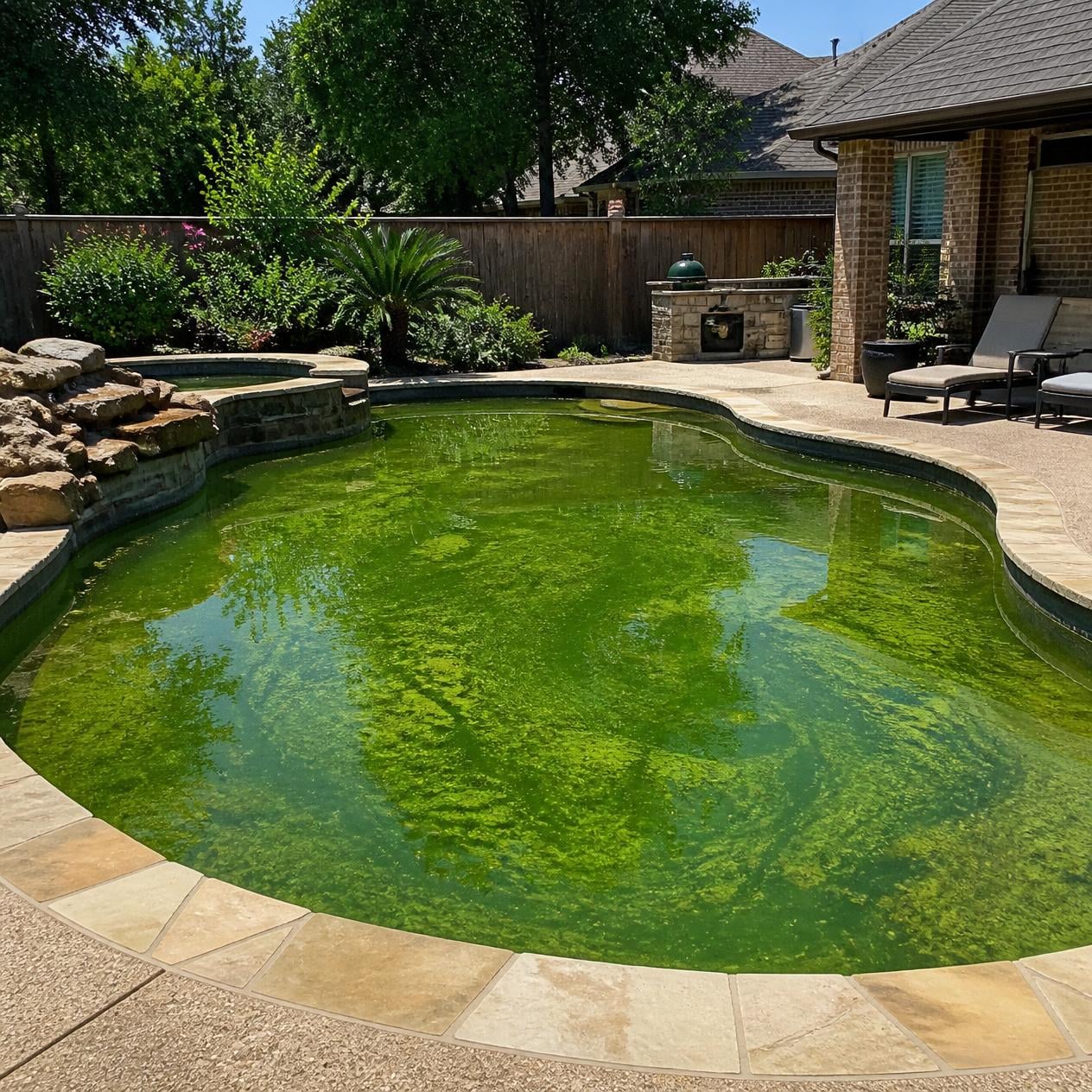
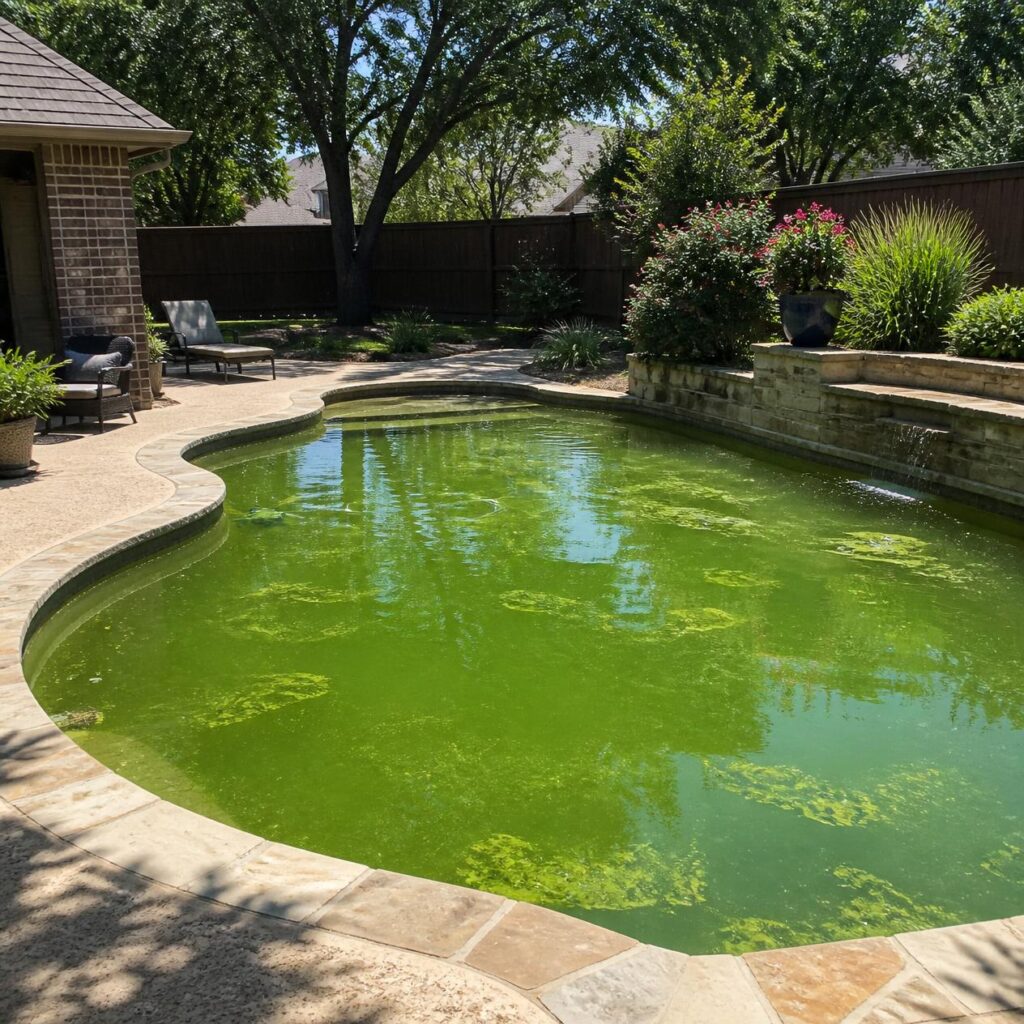
If your pool looked crystal clear on Monday and turned a hazy green by the weekend, you are not doing anything unusual — you are dealing with algae, and in a Fort Worth summer it can take hold fast. The short version: a pool turns green when its sanitizer (chlorine) can no longer keep up with the algae spores that land in the water every day. Add heat, sunlight, and a few missed maintenance days, and a clear pool can go green in 24 to 48 hours. The good news is that green water is almost always fixable, and it is very preventable. Here is exactly why it happens, how to clear it, and how to keep it from coming back all season.
The short answer: green means your chlorine lost the fight
Algae are microscopic, plant-like organisms that are always present in the air and water. A few spores land in your pool every single day and normally never get the chance to multiply — your chlorine kills them first. Water turns green when that balance breaks: chlorine drops too low, something is blocking it from working, or circulation stalls. Once algae get a foothold, they bloom quickly, cling to walls and steps, and cloud the water. Green water is really a symptom. The real problem is that your sanitizer stopped doing its job.
What actually causes a pool to turn green
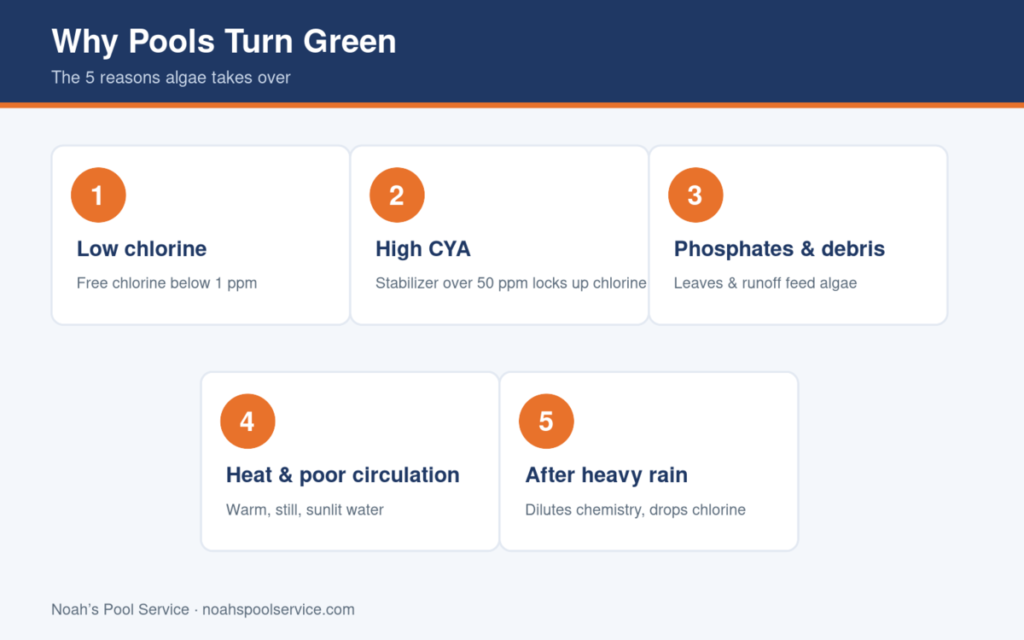
Low or ineffective chlorine
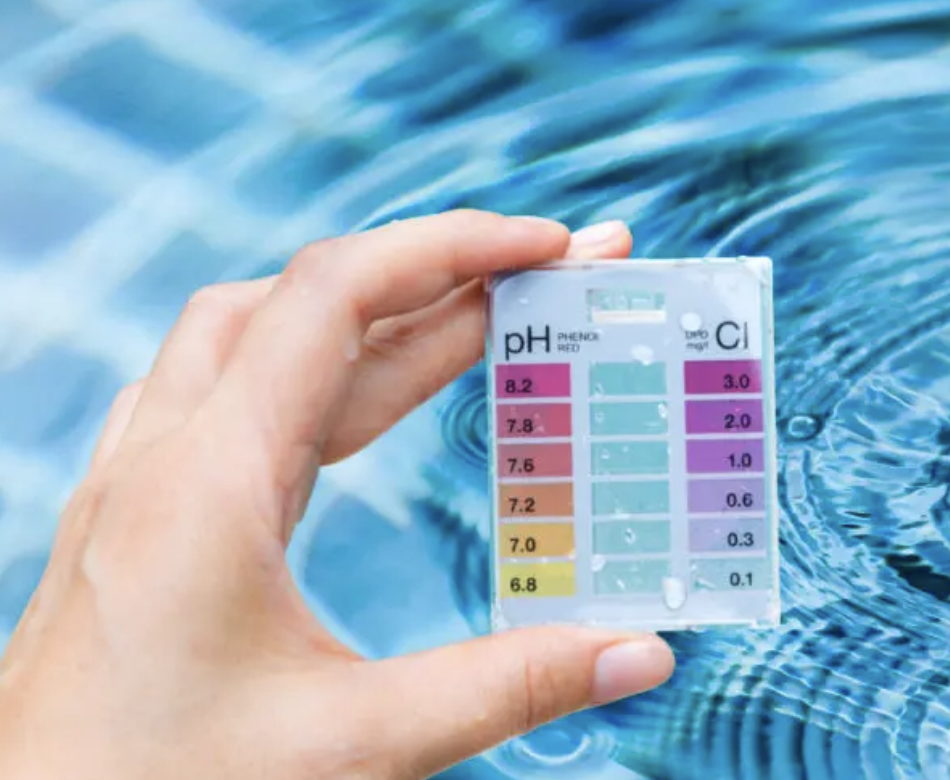
Free chlorine should sit between 1 and 3 ppm. When it drops below 1 ppm, algae can grow within hours in summer heat. Chlorine also gets used up faster than most owners expect — sunlight alone burns it off, and a hot, heavily used pool depletes it even quicker.
High cyanuric acid (CYA)
CYA, the stabilizer, protects chlorine from the sun — but too much of it locks your chlorine up and makes it far less effective. The target range is 30 to 50 ppm. Above roughly 50 ppm, you can be adding chlorine and still watch your pool go green because that chlorine simply is not available to work.
Phosphates and debris
Leaves, grass clippings, fertilizer runoff, and pollen add phosphates to the water — essentially food for algae. The more organic debris that sinks and breaks down, the faster a bloom accelerates.
Heat, sun, and poor circulation
Warm, still, sunlit water is the perfect environment for algae. If your pump is not running long enough to turn the water over each day, or your filter is dirty, you create exactly the stagnant conditions algae love. Texas summer afternoons check every one of those boxes.
After a heavy rain
A big North Texas storm dilutes your chemistry, drops phosphate-rich runoff into the pool, and can knock chlorine down all at once — which is why so many pools go green a day or two after heavy rain.
How fast can it happen? Faster than you think
In peak Fort Worth summer conditions — high heat, full sun, and a pool that missed a maintenance cycle — a clear pool can turn visibly green in 24 to 48 hours. That speed is exactly why consistency matters so much here. A single skipped week during the hottest stretch of the year is often all it takes.
How to fix a green pool, step by step
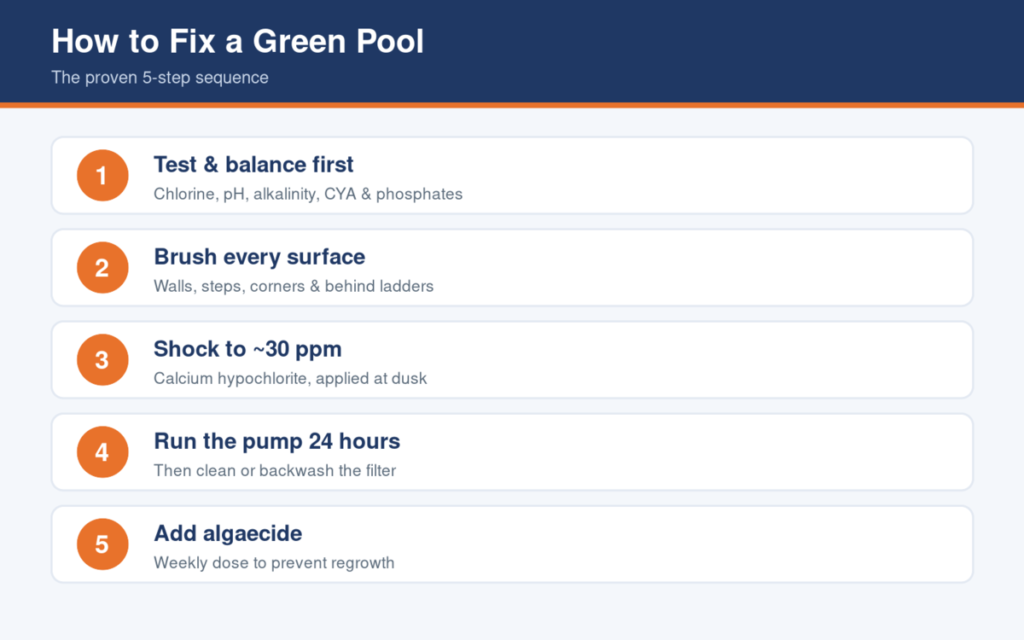
For a normal backyard pool with ordinary green algae, here is the proven sequence:
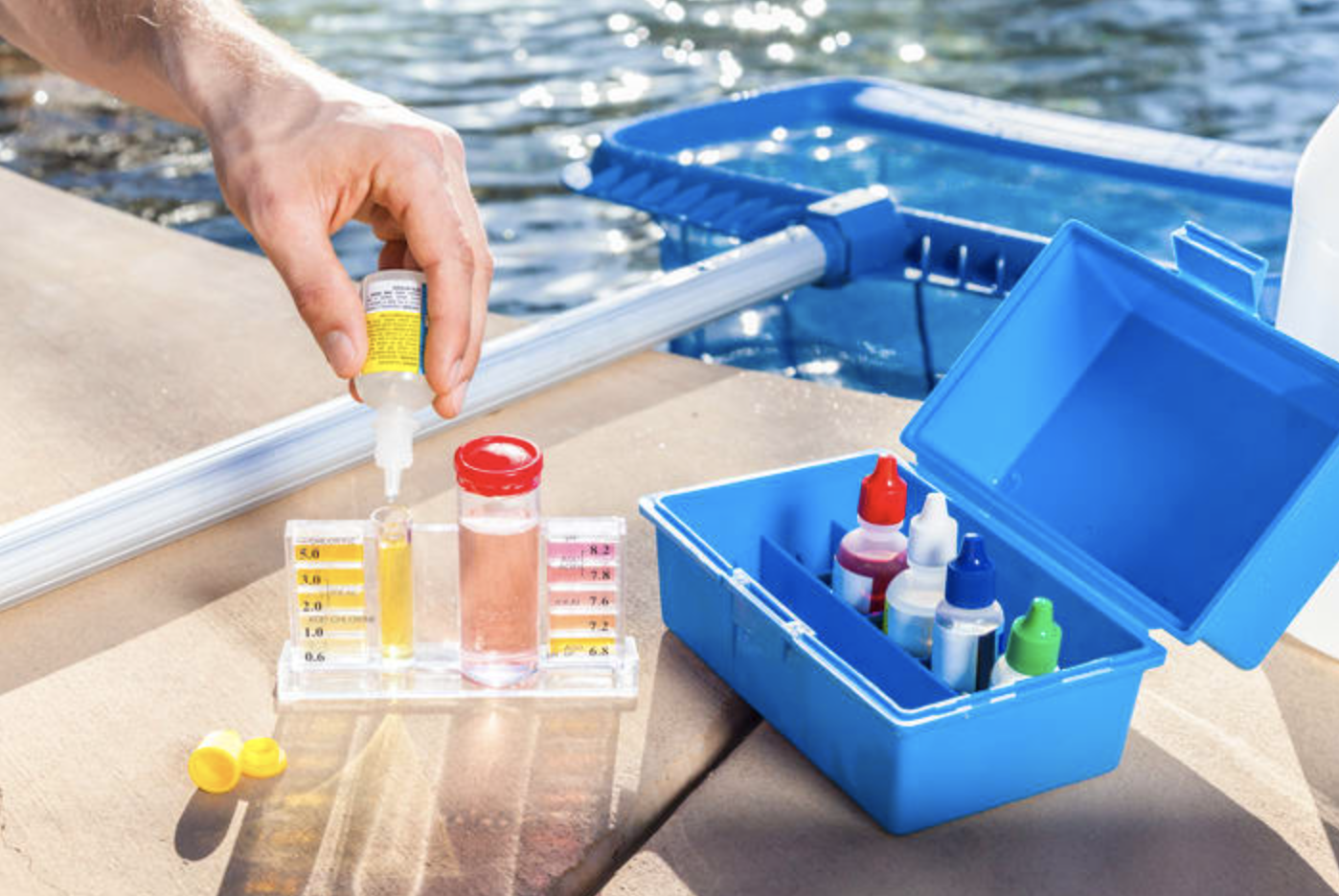
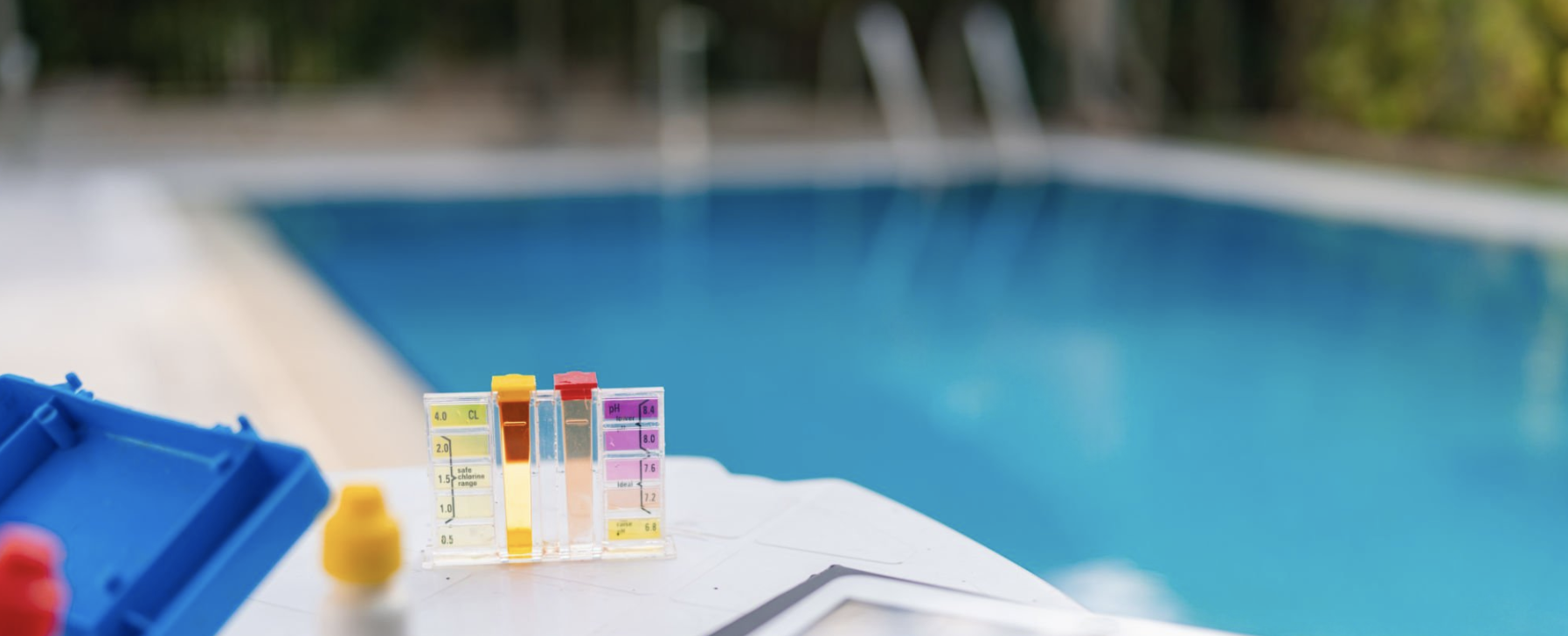
- Test and balance first. Check chlorine, pH (target 7.2–7.6), total alkalinity (80–120 ppm), CYA (30–50 ppm), and phosphates. High CYA or high phosphates will block your treatment, so address those before you shock.
- Brush aggressively. Brush every surface — walls, steps, corners, and behind ladders — to dislodge algae before you add chemicals.
- Shock the pool. Raise free chlorine to around 30 ppm using calcium hypochlorite, applied at dusk so the sun does not burn it off before it works. A standard 15,000-gallon pool with moderate algae typically needs about 5–6 pounds of shock.
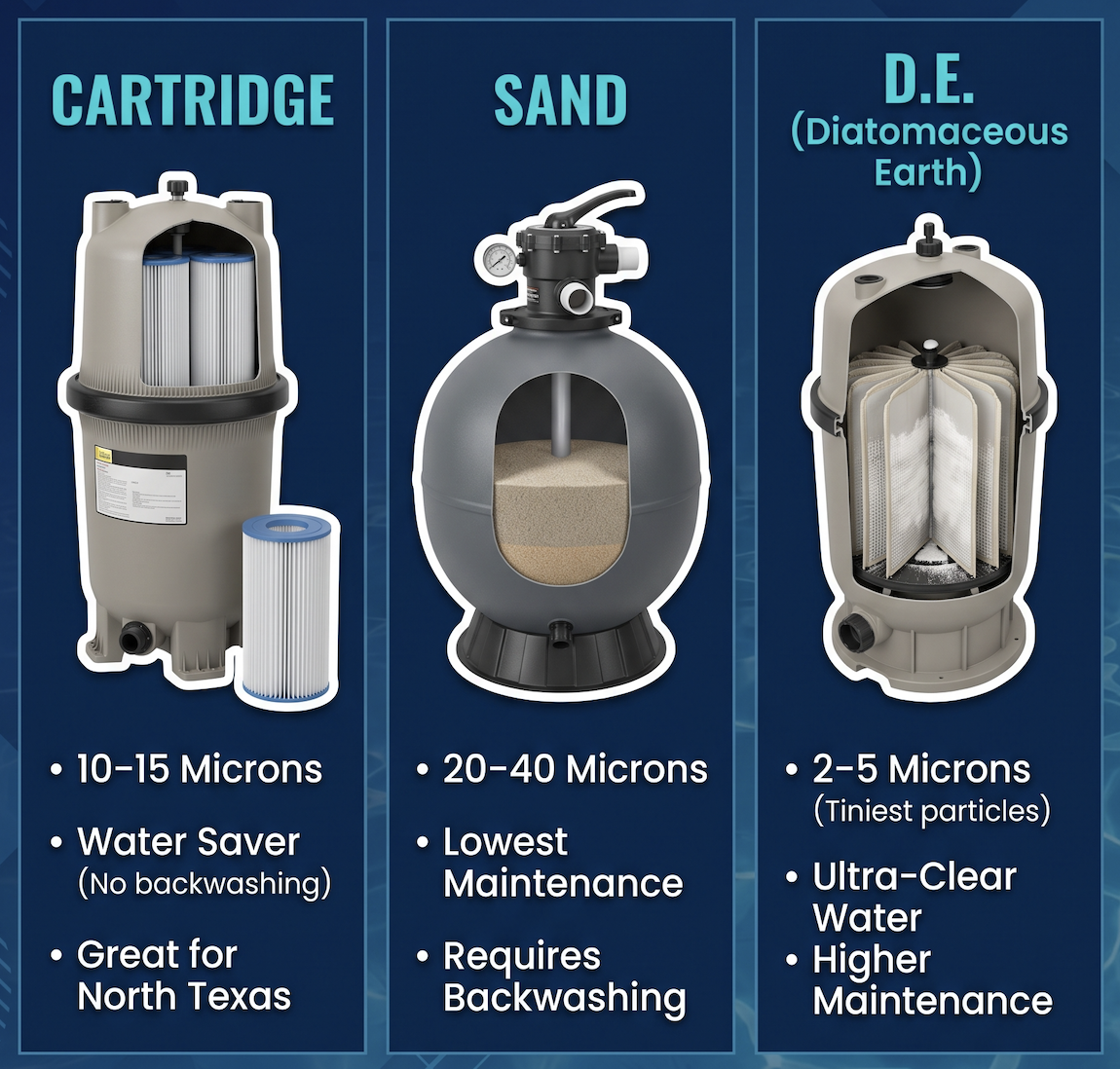
- Run the pump continuously. Circulate for 24 hours straight, then clean or backwash the filter to clear out the dead algae so you are not pumping spores back in.
- Follow up with algaecide. A weekly algaecide dose (per product directions) helps prevent regrowth while your chemistry re-stabilizes.
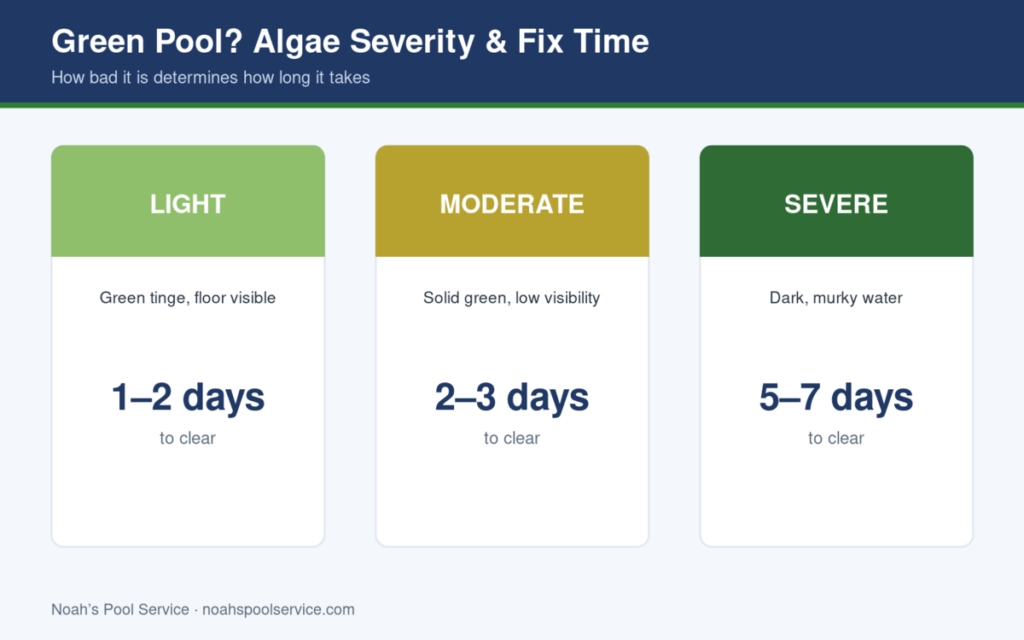
Ordinary green algae usually clears in one to three days depending on severity. Mustard and black algae are stubborn and take repeated brushing and shocking. If a pool has been neglected for weeks and looks like pea soup, the fastest fix is sometimes a professional drain, clean, and refill.
Nuisance algae vs. “toxic” algae — what to actually worry about
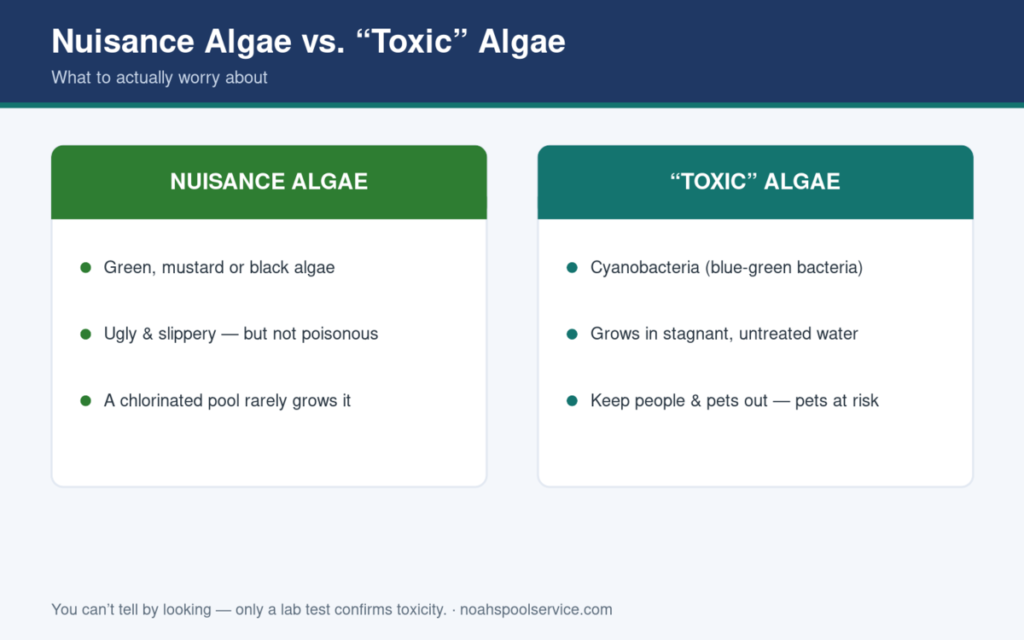
The green, mustard-yellow, or black algae you see in a backyard pool is nuisance algae. It is ugly and makes surfaces slippery, but it is not poisonous. The “toxic algae” you hear about in the news is cyanobacteria (blue-green algae) — technically a bacteria, not algae — and it is a problem of untreated, stagnant water like ponds and abandoned pools. A properly chlorinated residential pool almost never grows it. The practical safety rule: if water looks like paint or pea soup and has been sitting untreated, keep people and pets out until it is cleared and tested. Pets are the most vulnerable, since they will drink it.
How to keep your pool from turning green in the first place
Prevention comes down to one word: consistency. The pools that go green are almost always the ones whose maintenance slipped during the busiest, hottest weeks of summer — exactly when algae move fastest. To stay ahead of it:
- Keep free chlorine in the 1–3 ppm range every day, and shock proactively during heat waves.
- Run the pump long enough to fully turn the water over each day.
- Brush the walls and steps weekly, and keep the filter clean.
- Watch your CYA and phosphate levels — the two silent culprits behind “I keep adding chlorine and it’s still green.”
- Test after every heavy rain and rebalance quickly.
That daily-and-weekly rhythm is the entire case for regular weekly pool service: the pool never gets the window it needs to bloom.
When to call a professional
If your pool turns green repeatedly, clears and then comes back, or you are adding chemicals with no result, something underlying is off — usually CYA, phosphates, circulation, or a filter problem — and it is worth having a pro diagnose it.
At Noah’s Pool Service, we keep Fort Worth and DFW mid-cities pools clean, balanced, and swim-ready every single week — so green water never gets a chance to start. Our tiered weekly plans start at $23 a week, every plan is backed by our triple guarantee covering water balance, cleaning satisfaction, and algae prevention, and we can quote your pool fast using satellite imagery — no in-person visit required. See our pool cleaning services and plans, or grab more step-by-step tips at Noah’s Pool Tips.
Pool already green? Get a fast, custom quote today and we’ll get your water clear and keep it that way all season.
Frequently asked questions
Why does my pool keep turning green even after I add chlorine?
Usually because your cyanuric acid (CYA) or phosphate levels are too high, which blocks chlorine from working, or your pump/filter isn’t circulating enough. Test CYA (target 30–50 ppm) and phosphates before adding more chlorine.
How fast can a pool turn green?
In peak Fort Worth summer heat and sun, a clear pool can turn green in 24 to 48 hours once chlorine drops or maintenance is missed.
How long does it take to clear a green pool?
Ordinary green algae usually clears in one to three days with proper testing, brushing, shocking, and filtration. Severe or neglected pools can take up to a week.
Is green pool water dangerous to swim in?
Ordinary pool algae isn’t poisonous, but green water means your sanitizer has failed, so harmful bacteria can be present and surfaces get slippery. Stay out until the water is balanced and clear.
How do I stop my pool from turning green every summer?
Consistency: keep chlorine in range daily, run the pump long enough to turn the water over, brush weekly, watch CYA and phosphates, and rebalance after heavy rain. Weekly professional service is the simplest way to guarantee it.