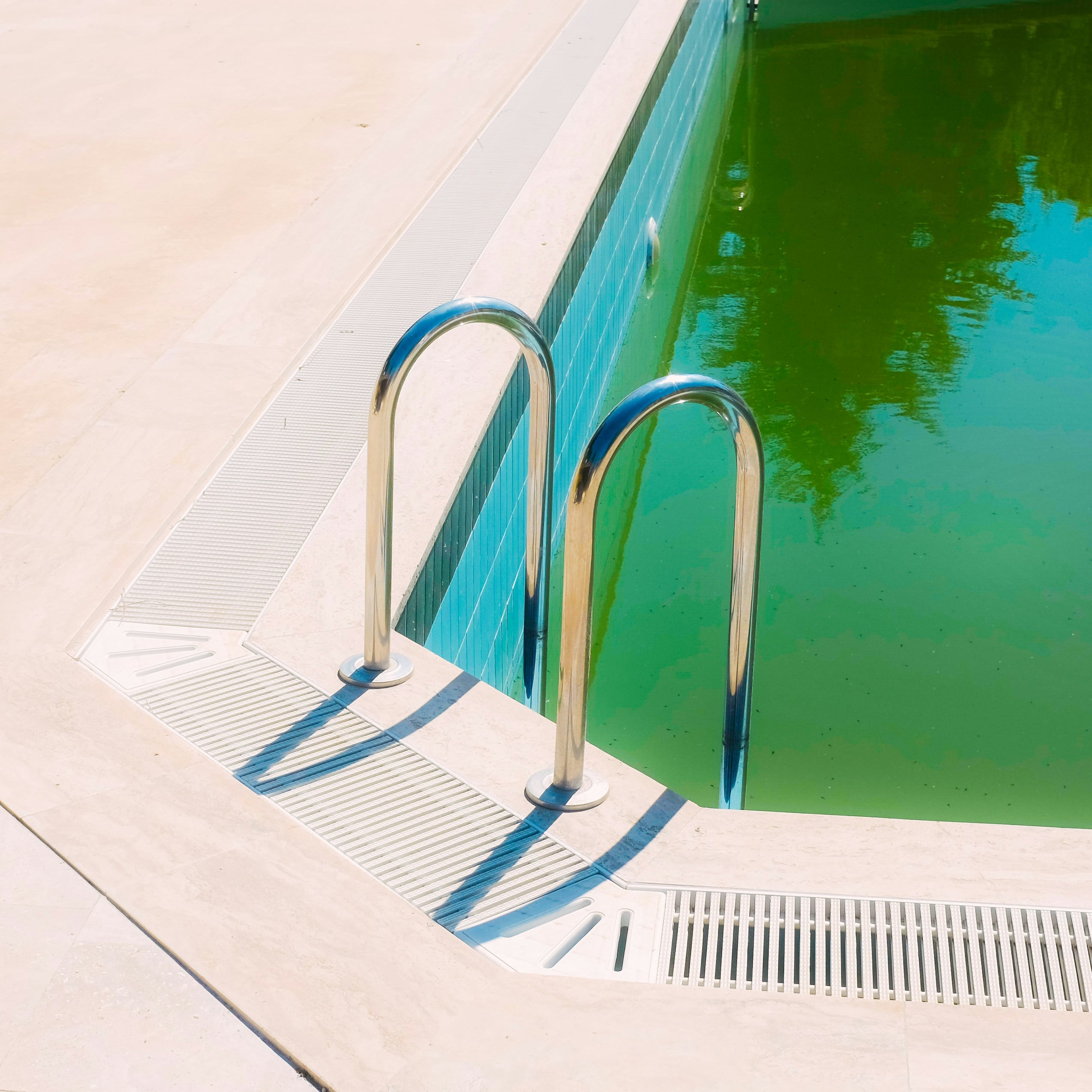
Algae in pool water can turn a perfectly clear backyard oasis into pea soup overnight, and it almost always catches you off guard. You walk outside on a Saturday morning with coffee in hand, ready to enjoy your pool, and stop dead in your tracks. The water that was crystal clear on Thursday has gone green in two days. It happens fast, it looks alarming, and the first instinct is to dump every chemical in the garage into the water and hope for the best. That approach almost never works.
At Noah’s Pool Service, our technicians see this scenario play out regularly in DFW backyards throughout the summer. After 20-plus years in the field, we can tell you that virtually every algae outbreak comes down to the same handful of root causes, and almost all of them are completely fixable. The key is knowing what you’re dealing with before you treat it. Green algae, mustard algae, and black algae each behave differently, resist chemicals differently, and require a different approach to eliminate. Get the treatment wrong and you’ll be fighting the same battle six weeks from now.
By the end of this article, you’ll know how to identify each type, what chemical targets to hit, and how to build the habits that keep algae from ever getting a foothold again.
Why algae keeps showing up in your pool
The three conditions algae needs to thrive
Algae isn’t mysterious. It needs three things to survive: sunlight, warmth, and a gap in your sanitizer levels. A single hot week, a heavy rainstorm that dilutes your chemicals, or one missed dosing session can drop your free chlorine just low enough to give algae the opening it needs. Once it establishes, it spreads rapidly rather than gradually, pool algae can double under favorable conditions in a matter of hours.
Poor circulation plays a major role too. Dead spots along pool walls, in corners, behind steps, and in shaded areas receive less chlorine contact than the center of the pool. Those low-flow zones are where algae colonies take hold first, which is why you’ll often find the first signs in those exact spots before the rest of the water is affected.
How pool water chemistry creates the opening
Imbalanced water doesn’t grow algae on its own. What it does is disarm your chlorine. When pH climbs above 7.8, chlorine’s killing power drops by as much as 60 to 70 percent. Your test strip might show 3 ppm of chlorine, but at that pH level, a large portion of it is sitting there doing almost nothing.
Cyanuric acid (CYA) is the other common culprit. CYA stabilizes chlorine against UV degradation, which is genuinely useful, but when levels creep above 50 ppm, it begins to “lock out” chlorine and prevent it from killing contaminants efficiently. This is a particularly common problem during hot Texas summers, when evaporation concentrates stabilizer levels faster than most people realize. Algae is a chemistry failure before it’s ever a visibility problem.
Green, mustard, and black algae: how to tell them apart
Green algae: the most common and most treatable type
Green algae is what most people picture when they think of a neglected pool. The water turns hazy and then progressively greener, from light teal to full pea-soup, and a slimy film develops on steps and walls. When you brush it, it disperses instantly into a green cloud before settling back down.
The good news: green algae is the easiest type to eliminate. It floats freely in the water column, making it highly accessible to shock treatment. If you catch it early and act quickly, most green pools clear within two to three days of proper treatment. This is the best-case scenario when algae shows up.
Mustard algae: the powdery yellow problem that keeps coming back
Mustard algae looks very different. It appears as a yellowish-brown, powdery coating that clings to shaded walls, floors, and corners. Here’s the key identifying test: brush it and watch what happens. It disperses into a yellowish, smoke-like cloud before settling right back down in almost exactly the same spot. That behavior is what separates it from dirt or sand, which people frequently confuse it with.
The water often stays clear with mustard algae, which is part of why it catches people off guard. The bigger challenge is that it’s genuinely chlorine-resistant. Enzymes produced by the algae neutralize chlorine before it can kill the cell, which is why standard shock at normal doses only suppresses it temporarily. Mustard algae treatment requires a different approach entirely, and any contaminated equipment, brushes, nets, or pool toys, that goes back into a treated pool will reinfect the water within days.
Black algae: the toughest one to eliminate
Black algae is in a different category. It appears as raised, dark spots that look like stains in plaster cracks, grout lines, and shady corners. Unlike green algae, it doesn’t float. Unlike mustard algae, it doesn’t brush away. It has a protective outer cap that shields the colony from chlorine at normal treatment levels, and deep root-like structures that anchor it firmly into pool surfaces.
Set realistic expectations before you start: black algae requires multiple treatments, aggressive brushing, and significantly higher chlorine levels than most homeowners realize. A single shock treatment will not eliminate black algae. The outer cap must be physically broken with a stainless-steel brush before chemicals can reach the colony underneath. This step isn’t optional.
How to kill algae in pool water fast: a step-by-step treatment plan
Step 1: Test your water and adjust pH before you shock
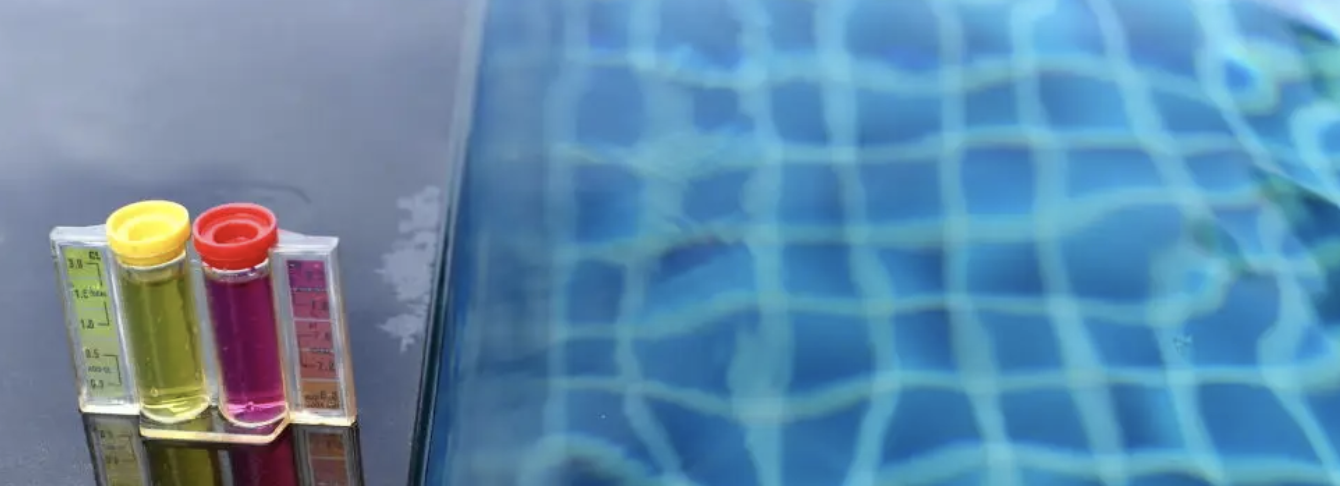
Before you add any chemicals, test your water and bring pH down to 7.2 to 7.4. Shocking into a high-pH pool wastes chemical and delivers poor results. Total alkalinity should sit between 80 and 120 ppm to hold the pH stable throughout the treatment process. This step takes an hour but saves you days of frustration.
Step 2: Brush every surface before adding chemicals
Use a stainless-steel brush on plaster pools and a nylon brush on vinyl-lined pools. Brush every wall, step, corner, and shaded area thoroughly before you add a single chemical. For black algae, brushing breaks the protective cap and exposes the colony. For mustard algae, brushing redistributes it into the water column where the shock can reach it. Do this before shocking, not after.
Step 3: Shock the pool at the right dosage for your algae type
Dosage matters enormously here. For green algae, target 10 to 30 ppm of free chlorine. That works out to roughly 1 to 3 pounds of calcium hypochlorite per 10,000 gallons, depending on bloom severity. For mustard algae, double that dosage and target 40 ppm. For black algae, use triple the green algae dose and hold 40 to 60 ppm for at least 24 hours, ideally three to five days for severe cases.
Always add shock at dusk. UV rays degrade chlorine rapidly, and adding it in direct sun dramatically reduces its effectiveness. Keep the pump running continuously throughout the treatment period.
Step 4: Add algaecide, then run the filter around the clock
Add algaecide 24 hours after shocking, once the initial chlorine level has had time to complete its kill cycle and begin to taper, always follow the label directions for your specific product. Run the pump continuously for 24 to 48 hours and check filter pressure every 6 to 12 hours. Backwash or clean your cartridge whenever pressure rises 8 to 10 psi above its normal baseline. Dead algae clogs filters fast, and a clogged filter dramatically slows clearing time. Once the water clears, vacuum dead algae to waste rather than through the filter to prevent debris from recirculating back into the pool.
Picking the right algaecide for each algae type
Polyquat algaecides: the go-to for mustard algae and prevention
Polyquaternary ammonium algaecides, commonly called polyquat, are non-staining, non-foaming, and compatible with all pool types including saltwater systems. For mustard algae treatment, use a double dose of 6 to 12 ounces per 10,000 gallons. For ongoing prevention, 2 to 4 ounces per 10,000 gallons added weekly keeps algae from establishing in the first place.
One important caution: don’t mix polyquat with clarifiers. They neutralize each other and you’ll get the benefit of neither. Polyquat is a reliable long-term maintenance algaecide because it leaves no metal residue in the water and poses no staining risk on any pool surface.
Copper-based algaecides: the heavy hitter for green and black algae
Copper compounds work by disrupting chlorophyll production, and they kill green algae within 24 to 48 hours. For black algae, copper at 50 percent concentration applied after thorough brushing can penetrate the root structure in a way that standard shock alone cannot. The key compatibility issue: copper stains plaster and fiberglass in high-pH or high-calcium water, and it can turn blonde hair green. Chelated copper formulas significantly reduce staining risk and are worth the extra cost.
Limit copper applications to one or two times per season for severe cases. Silver-based metallic algaecides offer a solid alternative for black algae with less staining risk, though they tend to cost more per treatment.
Water chemistry habits that keep algae from returning
The four numbers that matter most for algae prevention
Consistent water chemistry is what separates pools that rarely see algae from pools that fight it every month. The targets are straightforward:
- Free chlorine: 2 to 4 ppm at all times
- pH: 7.2 to 7.4 (the lower end maximizes chlorine’s killing power)
- Total alkalinity: 80 to 120 ppm to keep pH from drifting
- Cyanuric acid: 30 to 50 ppm (above 50 ppm and chlorine efficiency drops sharply, especially during hot Texas summers)
These aren’t arbitrary ranges. Each one plays a direct role in how effectively your chlorine kills contaminants. Let any one of them slide and you’ve created the opening algae needs to establish.
How often to test your pool water during swim season
Free chlorine and pH should be tested twice per week during summer. Total alkalinity needs a weekly check. CYA and calcium hardness should be tested monthly. Regardless of your normal schedule, test after heavy rain or a high-use weekend. Both events dilute chemicals and introduce contaminants that can push your levels out of range within hours.
Brush your walls and steps two to three times per week even when the water looks clear, and more frequently when temperatures push past 95 degrees. In DFW’s summer heat, algae can begin establishing on surfaces within 24 to 48 hours of a chemistry drop. Regular brushing breaks up early colonies before they ever become visible.
When recurring algae means it’s time for consistent professional care
Why algae keeps coming back despite treatment
The most frustrating pattern in residential pool care goes like this: you shock the pool, it clears up, and six weeks later it’s green again. The treatment wasn’t wrong. The problem is the gap between treatments. Free chlorine drifts, pH climbs, CYA concentrates through evaporation, and the pool sits unattended long enough for algae to take hold again. In a Texas summer, that gap doesn’t have to be long.
Maintaining the chemistry window that prevents algae can’t happen reliably with monthly or even bi-weekly attention. The consistent weekly check-in is what catches a pH reading of 7.9 before it becomes a green pool, and brushes the corners before a colony has time to root.
What a professional weekly maintenance plan actually prevents
The Noah’s Pool Service Signature plan addresses this cycle directly. Every week, our technicians test and balance your water, brush all surfaces, vacuum the pool floor, clean the skimmer and pump basket, and handle filter maintenance. Checking in every seven days means chemistry drift gets corrected before it ever reaches the point where algae can take hold.
The plan also includes our algae-free guarantee. If algae appears while your pool is on the Signature plan, we handle the remediation at no additional charge. That guarantee isn’t a sales pitch, it reflects the confidence that comes from knowing consistent weekly care prevents the conditions that cause blooms in the first place. For busy homeowners in Southlake, Keller, and across the DFW mid-cities, handing off that weekly responsibility means one less thing to manage during a long Texas swim season that stretches well into the fall.
Putting it all together
The framework for handling pool algae is clear: identify the type, match your shock dosage and algaecide to it, run the filter until the water is completely clear, and then commit to the chemistry habits that prevent it from returning. Most algae problems aren’t caused by one bad day. They’re caused by inconsistent maintenance accumulating over time until conditions finally tip the wrong way.
The fastest path to an algae-free pool is keeping algae in pool water from forming in the first place. That’s true whether you’re managing it yourself with a disciplined weekly routine or handing it off to a team that puts a written guarantee behind the results. Either way, the water chemistry doesn’t lie. Keep those four numbers in range, brush consistently, and algae rarely gets a chance to become your problem.
If you’re tired of fighting the same battle season after season, reach out to Noah’s Pool Service for a custom quote. We serve the DFW mid-cities area and we’re ready to take pool maintenance off your plate for good.
Frequently Asked Questions About Pool Algae
- What are the main types of pool algae, and how do I tell them apart?The three main types are green, mustard, and black algae. Green algae turns water cloudy/green and forms a slimy film that disperses easily when brushed. Mustard algae looks like a yellowish-brown powder on shaded walls that settles right back down after brushing. Black algae creates raised, dark spots anchored into grout or plaster that do not brush away easily.
- Why does my pool keep getting algae even though chlorine levels look fine?If chlorine levels appear normal but algae still grows, high pH or high cyanuric acid (CYA) is likely “locking out” your chlorine. When pH rises above 7.8, chlorine loses up to 70% of its killing power. If CYA creeps above 50 ppm (common in hot Texas summers), it prevents chlorine from working efficiently.
- How do I get rid of mustard algae permanently?Mustard algae requires a double shock dosage (targeting 40 ppm free chlorine), thorough brushing, and a non-staining polyquat algaecide. Because mustard algae is chlorine-resistant and easily reinfects pools, all floats, nets, brushes, and toys must also be sanitized.
- Why won’t standard pool shock kill black algae?Black algae forms a protective waxy outer cap and deep root structures that shield it from standard chlorine levels. You must aggressively brush the spots with a stainless-steel brush to break this cap before applying a triple shock dose (40–60 ppm) or copper-based algaecide.
- How can I prevent algae from coming back during hot DFW summers?Maintain free chlorine between 2–4 ppm, keep pH near 7.2–7.4, keep CYA between 30–50 ppm, and brush pool walls 2–3 times per week. Testing water twice weekly during summer prevents minor chemical drifts from turning into full algae blooms.