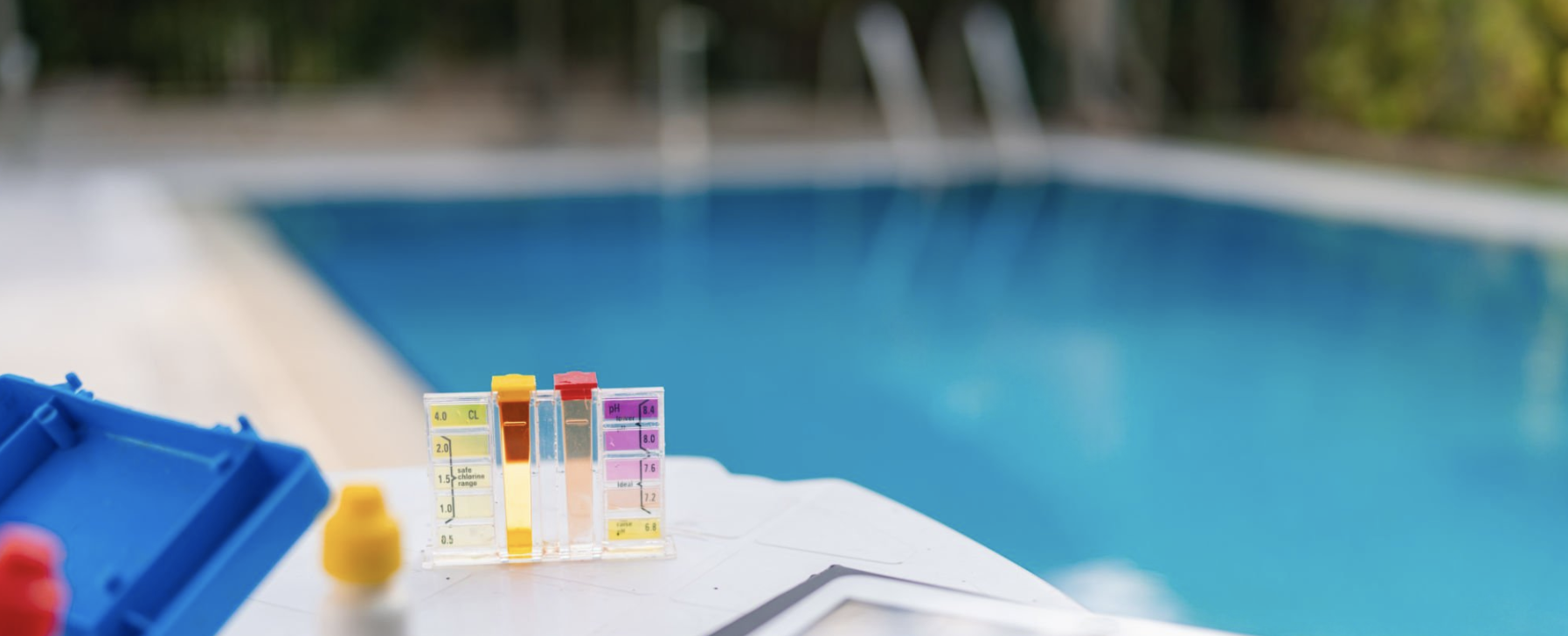
Store pool chemicals in a cool, dry, ventilated spot away from your house and vehicles, never in the garage. Keep chlorine products sealed and separated from each other and from acids. Never let two different chlorine types touch, including in your skimmer or inline chlorinator. Keep muriatic acid inside a second container because the jug itself fails over time. Only buy what you will use in about six months, and keep test kits somewhere cool, dark, and visible so you actually test every week.
If you handle any of your own pool care, storage is the part most homeowners get wrong. Noah has seen fences, equipment, and even trucks burn because two products that both said “shock” ended up in the same bucket. Here is how he tells our customers to store everything, category by category.
Disinfectants (chlorine, shock, tablets)
Chlorine products are the hardest pool chemicals to store. They are corrosive, they give off fumes, and over time they attack their own containers.
- Not in the garage. Chlorine fumes rust tools, bikes, water heaters, and anything metal nearby. A leaking container can damage a car parked next to it, and the fumes are hard on engines and electronics.
- Cool, dry, ventilated, and shaded. A dedicated deck box or outdoor cabinet away from the house works well. Heat and sunlight break chlorine down faster.
- Buy about six months’ worth, not a season’s. Chlorine loses strength in storage, so a big bulk buy often means paying for product that is weaker by the time you use it.
- Keep lids tight and containers upright, and keep liquid chlorine off concrete where a leak will stain.
The one rule that prevents fires: never mix chlorine types
Sodium dichlor, calcium hypochlorite (cal hypo), and trichlor are all sold as chlorine. They are chemically different, and when they meet, the reaction can produce heat, gas, and fire. That reaction does not need an open flame.
Where it usually happens:
- In the skimmer. Someone drops a trichlor tablet in the skimmer, then later pours cal hypo shock through the same skimmer.
- In an inline chlorinator. Mixing tablet types or adding granular shock into a chlorinator that still has tablet residue.
- In a reused bucket or scoop. Residue from one product meets the next.
The fix is simple: one product, one container, one scoop. Read the label and follow the directions exactly, every time, even if you have done it a hundred times. If you are not sure what is already in your chlorinator, let it run empty before switching products.
Balancing chemicals (soda ash, baking soda, calcium chloride, muriatic acid)
Balancing chemicals are easier to store than chlorine, with one important exception.
- Soda ash and calcium chloride: keep them dry. Both pull moisture out of the air and turn into a solid brick if the lid is loose. A sealed bin with the bag inside is enough.
- Baking soda: the safest thing on your shelf. It is the same product you keep in the kitchen.
- Muriatic acid: the exception. The plastic jug it comes in weakens after roughly nine months and can fail without warning. Keep the jug inside a second, acid-safe bin with a lid, store it well away from all chlorine products, and buy only what you will use in a few months. Acid fumes also corrode metal, so it does not belong in the garage either.
Test kits and reagents
Bad reagents give bad readings, and bad readings cost you money in chemicals you did not need.
- Cool, dark, and ventilated. Heat and sunlight spoil reagents before their printed expiration date. A hot garage shelf or a sunny windowsill ruins them in one summer.
- Somewhere you will see it weekly. A pool company burns through a bottle of reagent in under a week; yours has to survive months. Keeping the kit where you will notice it makes weekly testing a habit instead of a chore.
- Replace reagents about once a year, even if there is liquid left.
Storage checklist
- Dedicated outdoor cabinet or deck box, shaded and ventilated, away from the house and cars
- Chlorine products separated from each other and from acid
- One scoop per product, labeled
- Muriatic acid in a second lidded bin
- Soda ash and calcium chloride sealed against moisture
- No more than about six months of chlorine on hand
- Test kit stored cool and dark, reagents replaced yearly
- Everything up high or locked away from kids and pets
The easier option
Every Noah’s Pool Service technician arrives with the chemicals your pool needs that week, tests on site, and takes the leftovers with them. Nothing gets stored at your house, nothing gets mixed, and nothing sits in your garage. See what is included in our weekly service plans, or call or text 817-269-4520 for a satellite quote.
Frequently asked questions
Where should you store pool chemicals?
In a cool, dry, shaded, and ventilated spot away from your house and vehicles, such as a dedicated outdoor cabinet or deck box. Keep chlorine products separated from each other and from acids, and keep everything out of reach of children and pets.
Is it safe to store pool chemicals in the garage?
No. Chlorine and acid fumes corrode tools, water heaters, and vehicles, and a leaking container can cause damage or a fire. Store pool chemicals outside the garage in a ventilated, shaded location.
Can you mix different types of pool chlorine?
Never. Sodium dichlor, calcium hypochlorite, and trichlor react with each other and can produce heat, gas, and fire. Use one product at a time, keep separate scoops, and never add a different chlorine product to a skimmer or chlorinator that still contains another.
How should you store muriatic acid for a pool?
Keep the original jug inside a second, lidded, acid-safe bin, away from all chlorine products and metal. The jug itself can fail after roughly nine months, so buy only what you will use in a few months.
How long do pool test kit reagents last?
About a year when stored cool and dark. Heat and sunlight spoil reagents faster than their printed expiration date, and spoiled reagents give inaccurate readings.