Skip to content
When comparing DIY pool maintenance vs. professional service cost, most pool owners assume they’ll come out ahead doing it themselves. It feels that way: you buy a few jugs of chlorine, spend a Saturday afternoon with a net and test strips, and skip the monthly service bill. That assumption is reasonable, until you actually run the numbers.
When you factor in startup equipment, monthly chemicals, your time, and the correction costs that hit almost every DIY pool owner at least once a season, the gap between doing it yourself and hiring a pro shrinks fast. Some homeowners are genuinely surprised to find that a professional chemical-only plan, like the one Noah’s Pool Service offers at $23/week, costs about what they’re already spending on chemicals alone, with none of the labor attached. This article gives you the real cost breakdown for both options, including the numbers most comparisons leave out.
DIY Pool Maintenance vs. Professional Service Cost: What You’re Really Paying Each Month
The honest monthly cost of DIY pool care isn’t just the price of chlorine. It’s chlorine plus every other chemical your pool needs, plus the tools to apply them, plus your time. Most people calculate only the first item and then wonder why the savings never materialize.
Monthly chemical spend for a standard pool
A standard residential chlorine pool needs several chemicals every month, chlorine is only the start. Chlorine runs $20, $50 depending on form and usage. Muriatic acid for pH control adds $8, $15. Alkalinity balancers cost $2, $10, and stabilizer (CYA) amortized across the season adds another $3, $5. Your realistic monthly chemical spend lands between $50 and $95 during swimming season, dropping to $20, $40 when the pool sees less use. Saltwater pools cut chemical costs by 40, 50%, but they introduce equipment expenses that offset those savings, covered in the next section.
The cost of your time (most people skip this)
Weekly pool maintenance takes between 1.5 and 3 hours when done properly: water testing, chemical additions, brushing walls, emptying skimmer and pump baskets, vacuuming, and the occasional trip to the pool supply store. Research puts the average closer to 3, 5 hours per week when you include logistics and troubleshooting. Even at a conservative $25/hour value for your weekend time, that’s $100, $200/month in real opportunity cost. Most DIY cost comparisons ignore this entirely, which makes DIY look cheaper than it actually is.
Test kits, small tools, and consumable replacements
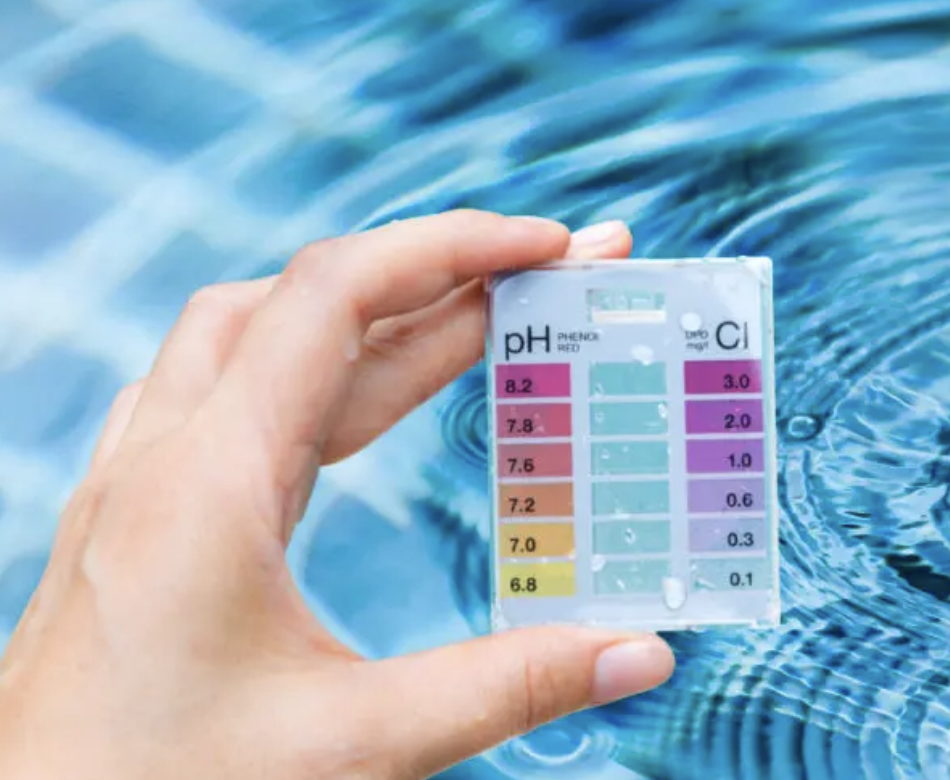
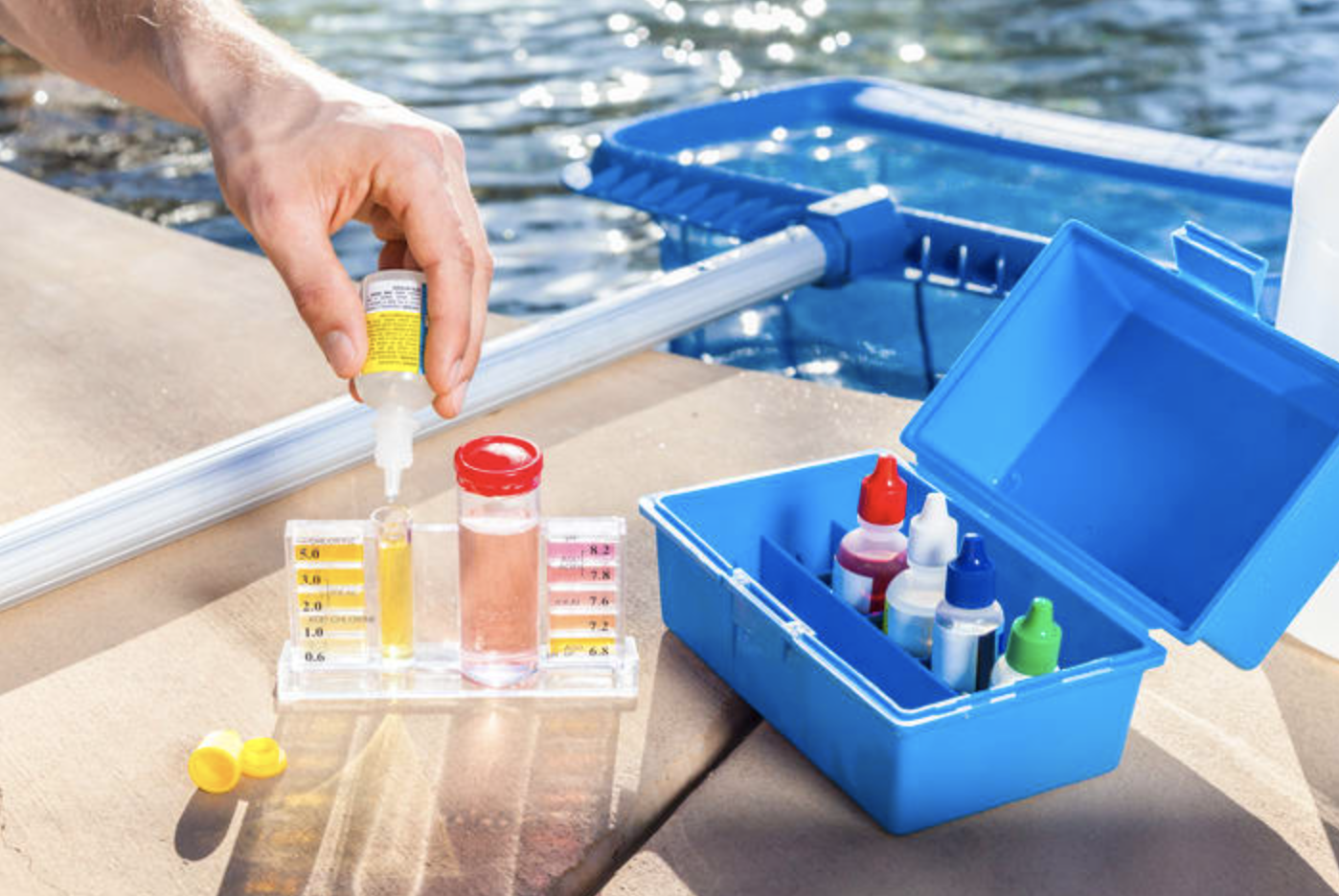
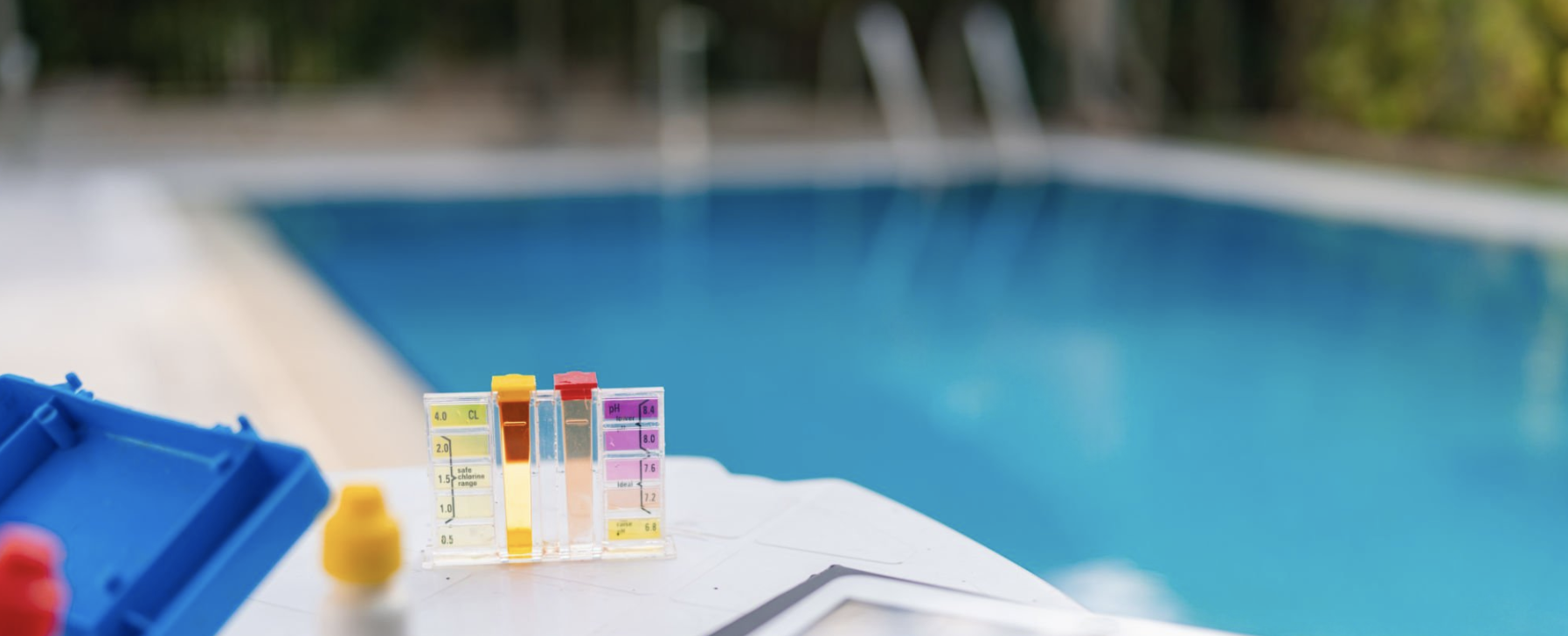
These aren’t one-time costs: they’re recurring expenses that show up month after month. Test strips run $7, $16, a quality reagent drop kit costs $50, $80, replacement skimmer nets run $20, $40 annually, and brush heads wear out too. When you amortize these across a year, you’re looking at another $15, $30/month in tool-related spending. Small individually, but real when added to your total.
The Startup Equipment Costs DIYers Often Underestimate
This is the piece of the equation that makes the comparison honest. Before you can save money doing your own maintenance, you have to buy your way into the ability to do it. That buy-in cost is significant, and most comparisons gloss over it entirely.
What you’re actually paying for on the equipment side
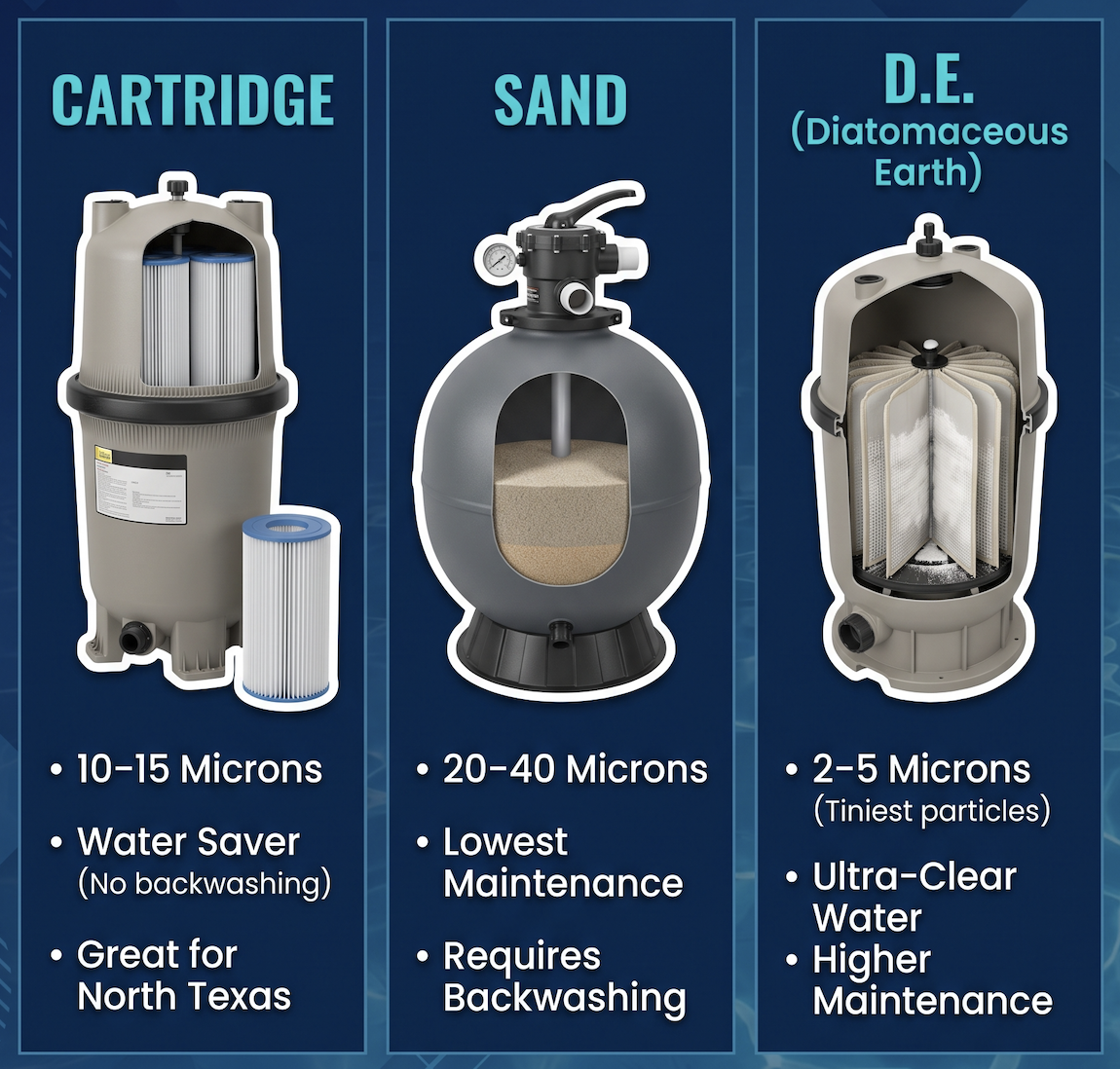
A functional DIY pool setup requires a few core pieces of equipment. Pumps run $600, $2,500. Filters cost $500, $1,800. If you’re going saltwater, add a salt chlorinator at $1,300, $2,500. Basic maintenance tools, manual vacuum, telescopic pole, skimmer net, and test kit, add another $150, $400. First-year all-in cost: $2,200, $5,550, not counting professional installation labor, which typically adds $1,100, $1,400 for filter installation alone.
Equipment lifespans and replacement timelines
Pumps last 8, 12 years. Cartridge filter media needs replacement every 2, 3 years. Salt cells require replacement every 3, 7 years at $400, $1,200 each. These aren’t hypothetical future costs: they’re scheduled expenses that belong in any honest annual calculation. A pool owner who replaces a salt cell every five years is effectively adding $80, $240/year to their DIY maintenance cost, even if it doesn’t feel like a maintenance expense when the bill arrives.
Hidden and Seasonal Expenses Most Homeowners Miss
These are the costs that catch DIY pool owners off guard. They’re unpredictable, but common enough that every DIY budget should include a line for them.
When the chemistry goes wrong
Algae blooms, pH crashes, and cloudy water from over- or under-treatment are the most frequent DIY mistakes. In the DFW area, a single professional algae cleanup runs $350, $800 for moderate cases and $800, $1,200 or more for severe infestations. Even if you treat it yourself, shock treatments, clarifiers, and flocculants to correct an imbalanced pool can run $30, $80 in a single week. One correction event per year erases months of chemical savings, and most DIY pool owners deal with at least one per season.
Seasonal costs that appear outside the monthly budget
Pool openings and closings in Texas run $150, $300 each. While the DFW climate means many homeowners do a lighter seasonal adjustment rather than a full winterization, the cost is still real. Heater tune-ups run $80, $150. Acid washes every few years cost $196, $420. These expenses don’t fit neatly into a monthly budget, which is exactly why most DIYers budget zero for them, until they hit. In Texas, where pools run 7, 9 months a year, seasonal costs are lower than in northern states, but they’re never zero.
What Professional Pool Service Actually Costs per Week and Month
Now that you have a complete picture of DIY expenses, the professional side of the comparison becomes much more useful. The numbers are closer than most people expect.
National and regional pricing context
Professional weekly pool service averages $195, $249/month nationally in 2026, with a median around $205. Texas averages approximately $198/month statewide for full weekly service including chemicals and cleaning. Chemical-only plans, the closest comparison to what DIYers pay for chemicals alone, run $100, $150/month across most markets. Full-service plans covering chemicals, cleaning, and equipment checks land in the $150, $250/month range in most DFW suburbs.
How tiered plans stack up against DIY spending
Noah’s Pool Service structures its plans at three price points for exactly this reason: different homeowners need different levels of service. The Chemical Only plan starts at $23/week (roughly $92, $100/month) covers professional-grade water testing and chemical balancing. When you factor in the waste, over-purchasing, and correction costs that real DIY chemical management produces, many homeowners spend more than this on chemicals alone. The Select plan starts at $30/week adds brushing, skimmer cleaning, and basket emptying. The Signature plan starts at $40/week and includes full vacuuming, netting, and all services, making it a complete replacement for someone currently spending 2, 3 hours every weekend in their backyard.
Annual Cost Side by Side: DIY vs. Professional Service
Put everything side by side and the picture changes. These are the figures worth sharing with your spouse or bookmarking for your next pool season planning conversation.
Year one: the equipment buy-in changes everything
DIY Year 1, assuming mid-range equipment, monthly chemicals, and basic tools, runs $2,800, $6,500 all-in. Noah’s Select plan at $30/week costs approximately $1,560 for the year. Even the full Signature plan at $40/week comes to roughly $2,080 annually, which lands below the low end of DIY first-year costs. The break-even point on equipment buy-in alone takes 3, 5 years of consistent DIY maintenance to reach, assuming no major correction events during that period.
Year two onward: where the comparison gets closer, but not always in DIY’s favor
After equipment is paid off, ongoing DIY annual costs for chemicals alone run $600, $1,140/year. Add the time value at a conservative rate and you’re looking at another $1,200, $2,400/year. Add one typical seasonal correction event and the total reaches $1,900, $3,840/year for realistic ongoing DIY maintenance. A Noah’s Signature plan runs about $2,080/year with no time cost, no correction events, and three service guarantees covering cleaning satisfaction, water balance, and an algae-free pool. For most homeowners, the math is genuinely close, and professional service eliminates the correction-event wildcard that blows up DIY budgets every season.
How to Decide Which Option Fits Your Pool and Your Life
The right answer isn’t the same for every homeowner. A few honest questions will tell you most of what you need to know.
When DIY pool maintenance makes sense
DIY works well for retired homeowners who genuinely enjoy the routine and have time to do it right every week. It also makes sense for owners of smaller, simpler pools who already own all the equipment and have maintained clean water for multiple seasons without algae issues. If your DIY chemical spend consistently stays under $60/month and you haven’t dealt with a green pool or major correction event in the past two years, staying DIY is a reasonable and defensible choice.
When hiring a pro saves you more than money
Busy families, new pool owners still learning the chemistry, and anyone who has fought a green pool in the last two seasons are strong candidates for professional service. The math shows that most DFW homeowners who value their evenings and weekends will come out ahead financially with a tiered professional plan, especially once you account for the real risk of a single algae cleanup event blowing up an otherwise careful DIY budget. If you’re not sure where your numbers actually land, getting a custom quote from Noah’s Pool Service gives you an exact weekly cost to compare against your current DIY spending. The comparison is often more eye-opening than people expect.
The Real Bottom Line
DIY pool maintenance is rarely as cheap as it looks on the surface. Once you account for startup equipment, the actual value of your time, seasonal surprises, and the cost of correcting chemical mistakes, professional service becomes genuinely competitive with doing it yourself. For most busy homeowners in the DFW area, it comes out ahead when you run an honest comparison.
When weighing DIY pool maintenance vs. professional service cost, the question isn’t really about chemicals, it’s about what your time is worth, how much risk you’re willing to carry, and whether the money you think you’re saving is actually staying in your pocket. Before your next pool season starts, run your own numbers. If you want a starting point, reach out to Noah’s Pool Service for a custom quote and see exactly what a weekly plan would cost for your pool size and service area.