

Getting Your Pool Ready for Fall in Texas: An End-of-Summer Checklist
Here in North Texas, the pool doesn’t really get a “closing” the way it does up north — we swim late, and our winters are mild but unpredictable. What your pool does need as summer winds down is a smart transition: dialing back where it makes sense, staying on top of chemistry, and getting ready for the first cold snap. Here’s the end-of-summer checklist we use. Noah’s Pool Service keeps Fort Worth-area pools healthy right through fall and winter.
Why Texas pools don’t get ‘closed’ for winter
In colder climates, pools get drained down and covered for months. Here, that’s usually the wrong move — our winters are short and interrupted by warm stretches, and a neglected pool can turn green on a mild week or suffer freeze damage on a cold one. The goal in Texas isn’t to shut down; it’s to keep the water balanced and circulating year-round and be ready when temperatures drop.
Your end-of-summer pool checklist
- Keep testing and balancing your water. Cooler water still drifts, and algae doesn’t fully quit until it’s cold.
- Deep-clean now while it’s still pleasant — brush, vacuum, and clear out summer’s buildup.
- Clean the filter. A filter that worked hard all summer will run better into fall after a good clean or backwash.
- Adjust pump run time as the days shorten, but don’t shut circulation down — moving water resists algae and freezing.
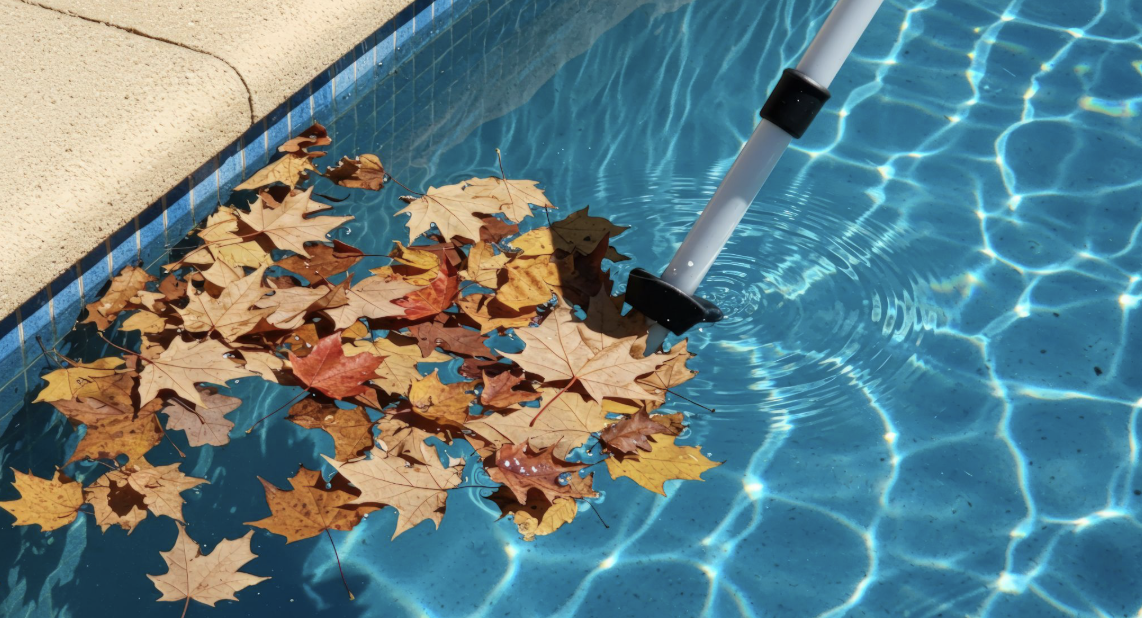
- Watch the leaves. As trees drop, skim and empty baskets more often so debris doesn’t sink and stain.
- Get your freeze plan ready before the first hard freeze — know how your equipment should run on a freezing night.
Getting ahead of freeze season
North Texas freezes are the real winter risk for pools. When a hard freeze hits, running the equipment keeps water moving through the pipes so it’s less likely to freeze and crack — the kind of damage that turns into an expensive spring repair. Knowing your freeze protection plan now, before the first cold snap, is a lot easier than scrambling the night it arrives.
This is also where year-round weekly service earns its keep: balanced water, clean equipment, and someone watching the forecast so your pool is ready. For more on why the cadence matters here, see our guide on how often Texas pools should be serviced.
Frequently asked questions
Do I need to close my pool for winter in Texas?
Usually not the way colder climates do. North Texas winters are short and interrupted by warm stretches, so most pools are better kept balanced and circulating year-round rather than drained and covered. The priority is steady chemistry and freeze protection, not shutting down.
How should I care for my pool in the fall in Texas?
Keep testing and balancing the water, deep-clean and clean the filter while the weather’s nice, adjust pump run time as days shorten without stopping circulation, stay on top of falling leaves, and get your freeze plan ready before the first cold snap.
Should I run my pool pump in the fall and winter?
Yes. You can reduce run time as temperatures drop, but keep the water circulating — moving water resists algae and is far less likely to freeze. On a hard-freeze night, running the equipment helps protect your pipes from freeze damage.
How do I protect my pool from a freeze in North Texas?
Have a freeze plan before the first hard freeze: know how your pump and equipment should run to keep water moving through the lines on a freezing night. Keeping equipment running during a freeze is the main way to reduce the risk of cracked pipes and costly repairs.
Does algae still grow in the fall?
It can. Algae slows as water cools but doesn’t fully quit until it’s genuinely cold, and warm fall stretches can trigger a bloom. Keep up testing, balancing, and brushing through the fall to stay ahead of it.