Skip to content


If you’ve ever watched a technician pull up, spend 20 minutes at your pool, toss in a few chemicals, and drive away without saying a word, you know the frustration. What exactly did they do? Many pool owners pay for weekly service without a clear picture of what they’re paying for, and that gap makes it nearly impossible to know whether you’re getting what you deserve. Understanding what is included in a professional pool cleaning visit gives you the information you need to evaluate any service plan with confidence.
A thorough weekly visit covers a lot of ground: water testing, surface cleaning, equipment checks, and more. At Noah’s Pool Service, we publish exactly what our plans include because transparency is how trust gets built. Not every company operates that way, which is why knowing the full checklist puts you in a stronger position when hiring or comparing providers.
By the end of this breakdown, you’ll know every task a professional should complete on a standard visit, how to spot a service that’s cutting corners, and what’s legitimately billed as an extra versus what should come standard.
What is included in a professional pool cleaning visit: water testing and chemical balancing
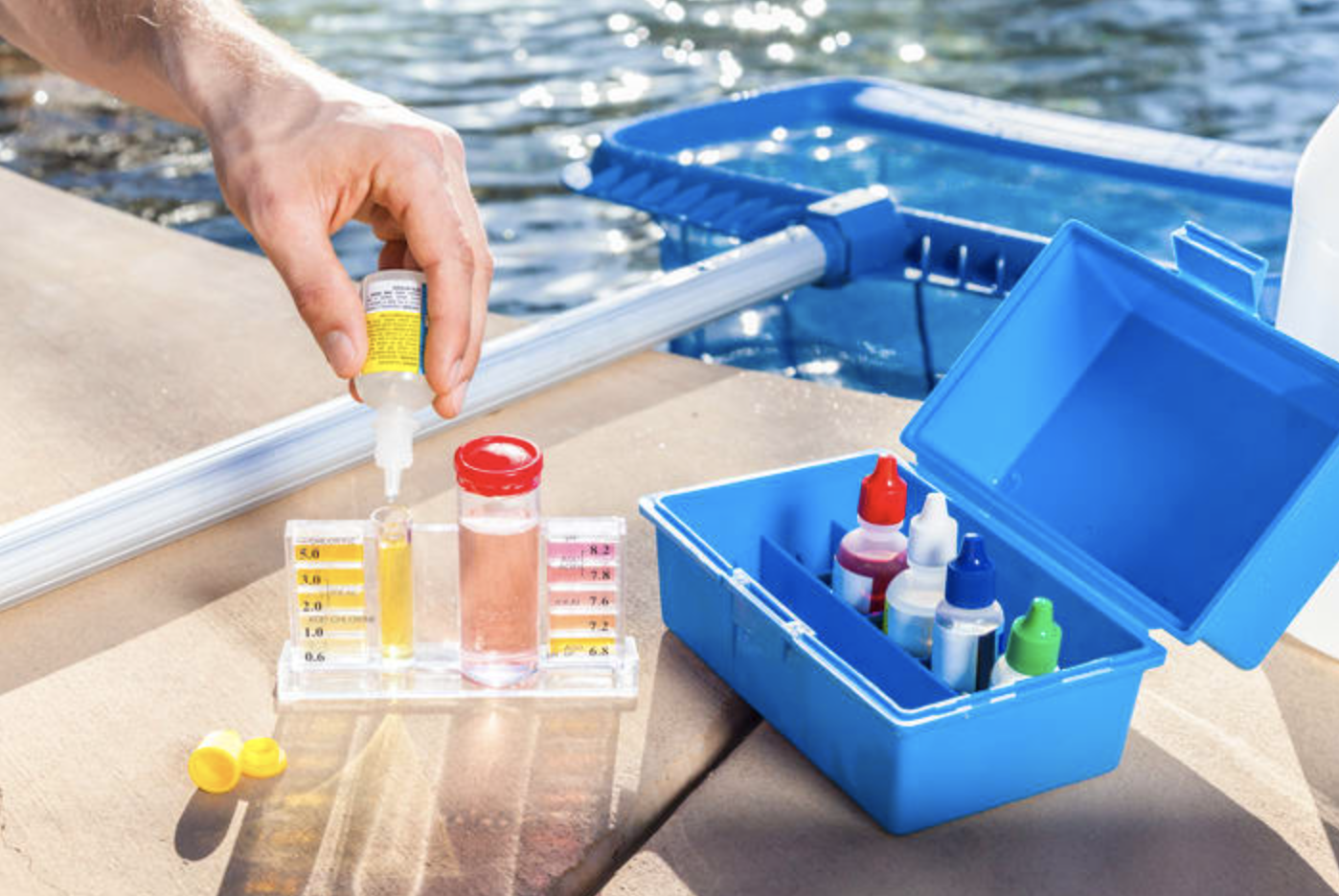
Before a technician touches a net or a brush, they should be testing your water. This step isn’t a formality; it’s the entire foundation of the visit. Without knowing where your chemistry stands, adding chemicals is guesswork, and guesswork leads to algae, irritated eyes, and damaged equipment.
The five tests a technician runs on arrival
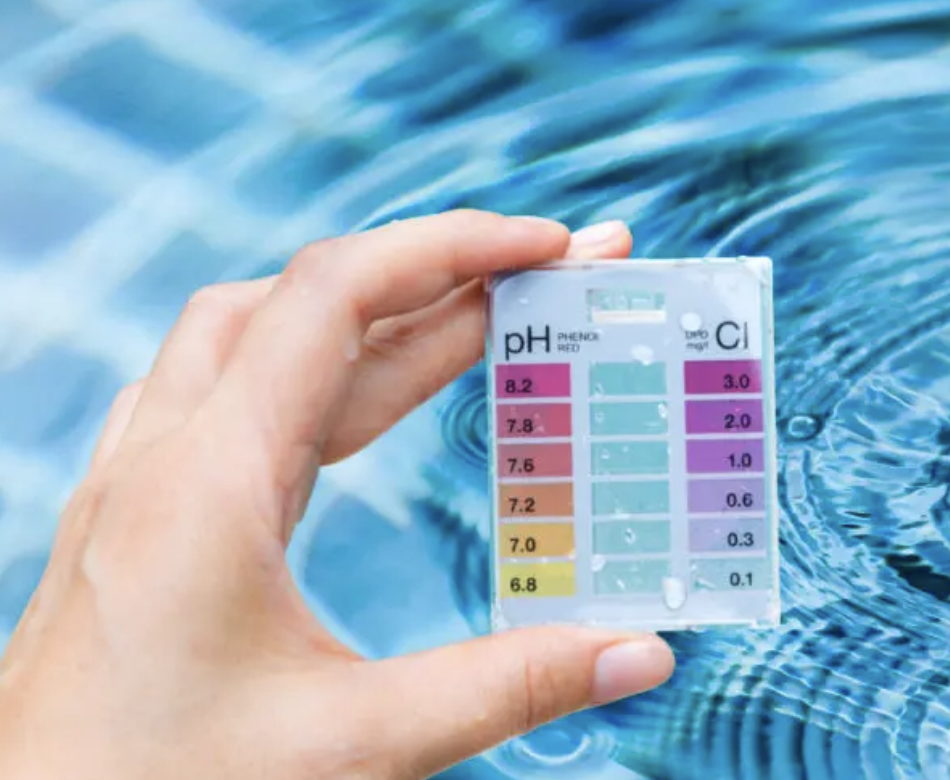
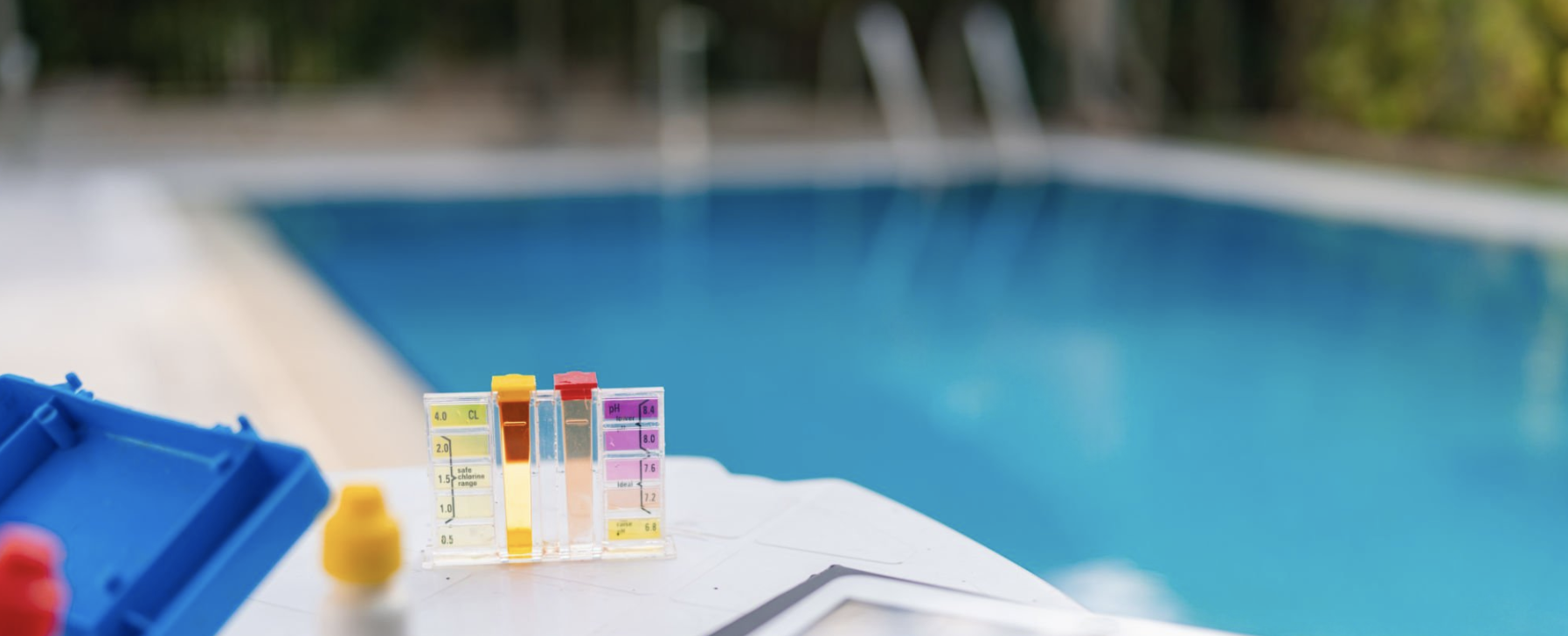
A properly equipped technician uses a test kit or digital meter to check five specific levels every visit. Each one controls something critical about your pool’s safety and function.
| Test | Target Range | Why It Matters |
| Free chlorine | 2.0, 4.0 ppm | Active sanitizer that kills bacteria and pathogens |
| pH | 7.2, 7.6 | Controls how effective chlorine actually is |
| Total alkalinity | 80, 120 ppm | Stabilizes pH so it doesn’t swing wildly |
| Calcium hardness | 200, 400 ppm | Prevents corrosion or scale buildup on surfaces and equipment |
| Cyanuric acid (CYA) | 30, 50 ppm | Shields chlorine from UV degradation, particularly important for outdoor pools in sunny climates like Texas |
What “balanced water” means for your swimmers
When any of these levels drift out of range, you feel it fast. Low pH burns eyes and corrodes metal fittings. High CYA makes chlorine sluggish and ineffective even when levels look fine on a test strip. Low alkalinity causes pH to spike and crash unpredictably. Chemical balancing is one of the most important steps performed on every visit, and it’s what separates a professional service from someone just pouring chlorine in and leaving.
What is included in a professional pool cleaning visit: surface cleaning
This is the work most people picture when they think about pool service. But there’s more to it than waving a net around. Skimming, brushing, and vacuuming follow a recommended sequence, and skipping that order reduces how effective each step is.
Why the order of surface tasks matters
A commonly recommended sequence is to skim first, then brush, then vacuum. Skimming removes floating debris before it sinks and starts decomposing. Brushing loosens algae, dust, and fine sediment from walls, steps, and corners so it gets suspended in the water. Vacuuming then pulls that suspended debris out before it settles back down. Reverse the order and you’re essentially just relocating dirt.
Brushing walls and corners: the algae prevention step many services skip
Algae doesn’t start in the open water; it starts in low-circulation zones. Steps, corners, behind ladders, and around return fittings are all prime spots where water moves slowly and biofilm builds up. Weekly brushing breaks up that biofilm before it matures into a visible algae bloom. This step is commonly skipped by rushed or underperforming services, which is exactly why some pools develop algae problems even with regular chemical service. If your current provider isn’t brushing walls on every visit, that’s a gap worth addressing.
Basket and filter maintenance: the part most homeowners overlook
The parts of your pool system you can’t see do most of the heavy lifting. Your circulation and filtration equipment runs constantly, and it depends on clear pathways to function. Basket and filter maintenance protects that equipment and keeps your water looking sharp between visits.
Skimmer and pump baskets: emptied every single visit
Your pool has two baskets, and both serve a different purpose. The skimmer basket sits at the pool wall and captures surface debris before it enters the plumbing. The pump basket sits inside the pump housing and catches anything that slips past the skimmer, protecting the impeller from damage. Both should be emptied on every visit without exception. A clogged basket restricts water flow, forces the pump to work harder, and reduces filtration efficiency across the whole system, a quick task with an outsized impact.
Filter pressure checks and backwashing on a schedule
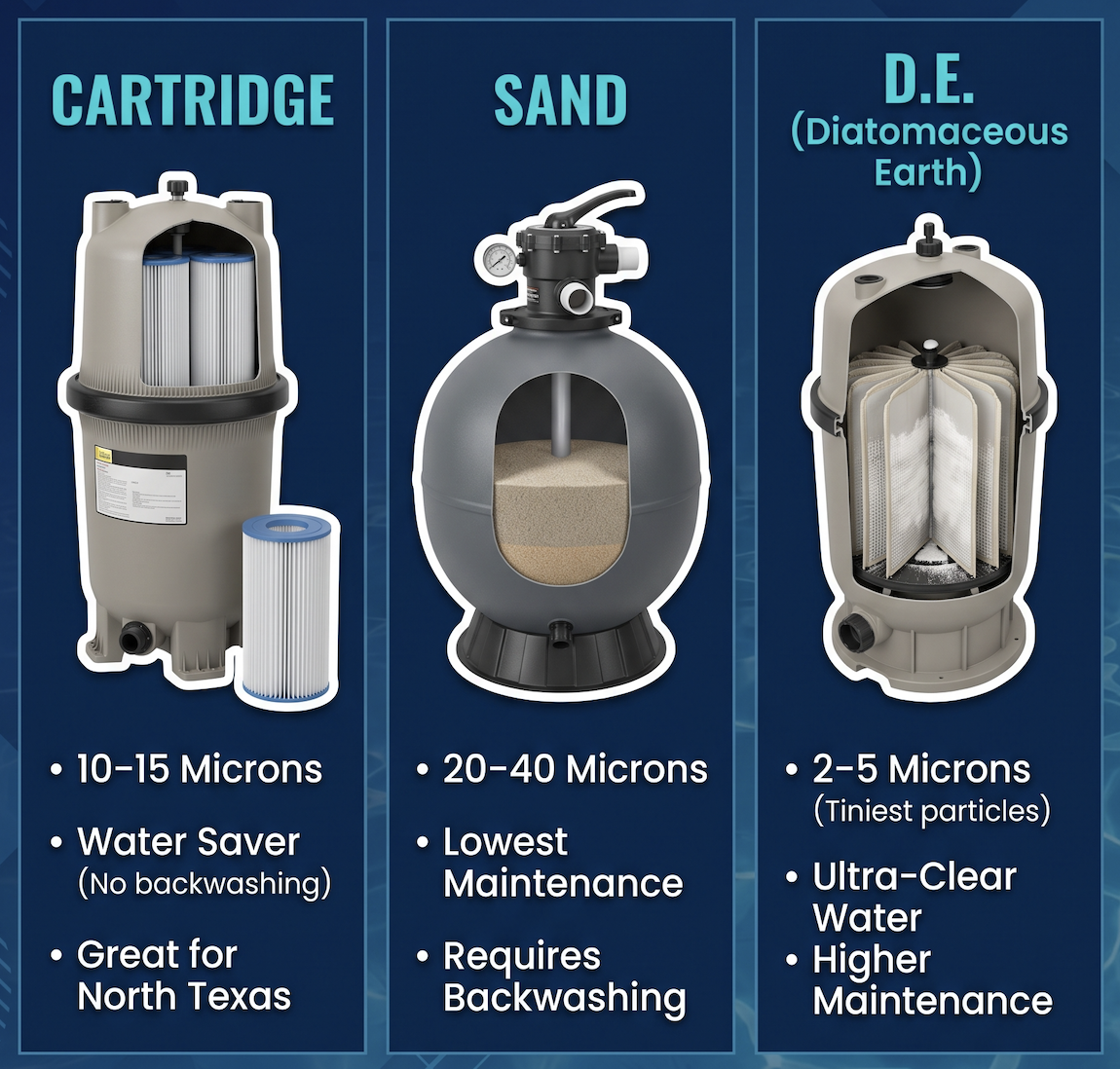
A technician checks filter pressure on each visit to determine whether the filter needs cleaning. For sand and DE filters, backwashing is triggered when pressure rises 6, 10 psi above the clean baseline, which typically happens every 2, 4 weeks depending on debris load and usage. Cartridge filters are rinsed rather than backwashed. Whether this step is included in your weekly price or billed as a periodic add-on depends on your service plan, so it’s worth confirming before you sign up.
Equipment inspection: pumps, heaters, valves, and timers
A professional technician isn’t just a cleaner; they’re also your early warning system for equipment problems. A quick but deliberate equipment check on every visit can catch a failing seal or a heater error code before it turns into a costly repair.
What a visual equipment check actually covers
On each visit, a technician should be looking and listening for specific signs across your core equipment. The pump should run quietly with no leaks around seals or fittings. The heater should show no error codes and no visible corrosion. Valves should operate smoothly, and automation timers should be set to the correct schedule. This check takes only a few focused minutes, but it’s one of the most cost-effective maintenance habits a pool owner can build into their weekly routine.
Weekly checks vs. what gets flagged for follow-up
Not every problem gets resolved on the spot. Minor adjustments, basket clearing, and backwashing are handled on-site. Unusual pump noise, a heater fault code, or a valve that won’t seat properly gets documented and communicated to you the same day. A reliable service tells you about problems before they become emergencies. If your technician never sends a report or flags an issue, that silence isn’t reassuring.
Weekly tasks vs. periodic add-ons: what’s not included by default
Every service plan has a scope, and some maintenance falls outside it by nature. Understanding the difference helps you budget accurately and avoid surprise charges.
Common services that are typically billed separately
The following services are generally not part of a standard weekly visit and are billed as one-time or periodic add-ons:
- Deep filter cleaning: beyond a standard backwash, typically $75, $200 per service
- Algae remediation / green pool recovery: $150, $400 per visit, higher for severe cases
- Acid wash: $250, $500, used to remove staining or scale from plaster surfaces
- Waterline tile scrubbing: $75, $200 depending on buildup
- Pool opening or closing: $200, $500 for seasonal startup or winterization
How to know when your pool actually needs an add-on
A well-run weekly plan catches problems early and reduces how often you need these extras. That said, certain situations call for a one-time service call: heavy debris after a storm, a visible green tint in the water, or filter pressure that won’t normalize after backwashing are all clear indicators. When those situations do come up, a good service provider communicates the issue and the cost upfront rather than surprising you after the fact.
How service tiers change what you actually get
Not every weekly plan is the same. Task scope varies significantly across service tiers, and understanding those differences is how you match a plan to your actual needs rather than just your budget.
Chemical Only, Select, and Signature: what each tier covers
At Noah’s Pool Service, three weekly plans map directly to the tasks covered in this article:
- Chemical Only at $23/week: water testing, chemical balancing, and disinfectant application on every visit. No brushing, skimming, or vacuuming. This plan works if you handle the physical cleaning yourself.
- Select at $30/week: everything in Chemical Only, plus brushing of walls and steps, and skimmer and pump basket cleaning. This covers most of the routine surface and circulation maintenance for a well-used pool.
- Signature at $40/week: everything in Select, plus full vacuuming of the pool surface and floor, netting, and filter backwashing or cartridge oxidizing as part of the regular visit. This is the complete weekly package.
Matching your pool’s needs to the right plan
For DFW homeowners dealing with long hot summers and heavy tree debris in neighborhoods like Southlake, Keller, or Colleyville, a full-service weekly plan often provides the best long-term value. You’re not paying for occasional deep cleans to recover from neglect; you’re preventing the conditions that require them. A thorough weekly service is almost always cheaper than a single algae remediation call. If you’re unsure which plan fits your pool, a custom quote takes the guesswork out of it.
The complete weekly pool service checklist, and what to do with it
Now you know what is included in a professional pool cleaning visit: water testing and chemical balancing, surface skimming and brushing, vacuuming, basket maintenance, filter pressure checks, and a visual equipment inspection. That’s the full picture. Every one of those tasks serves a specific function, and skipping any of them creates a gap that shows up eventually in your water quality or your equipment.
When you’re comparing service providers, don’t compare prices in isolation. Compare task lists. A lower weekly rate that skips brushing, basket cleaning, or equipment checks isn’t a deal; it’s a delayed problem. Ask prospective providers exactly what’s included on every visit and what triggers an additional charge.
At Noah’s Pool Service, every plan comes with a 30-day satisfaction guarantee, a water balance guarantee, and an algae-free guarantee, so you know exactly what you’re covered for from day one. Reach out to get a custom quote for your pool and find out which plan fits your schedule, your pool, and your budget.
Frequently Asked Questions (FAQ)
1. How often should pool water be tested and balanced?
Water testing and chemical balancing should be performed on every weekly visit. Key levels tested include free chlorine, pH, total alkalinity, calcium hardness, and cyanuric acid (CYA) to ensure safe, clear water and prevent equipment damage.
2. Why does the sequence of surface cleaning matter?
Following the correct order—skimming first, brushing second, and vacuuming last—ensures maximum efficiency. Skimming removes floating debris before it sinks, brushing loosens biofilm and sediment from walls and corners into suspension, and vacuuming clears out the remaining suspended particles.
3. How frequently should skimmer and pump baskets be emptied?
Skimmer and pump baskets should be emptied on every single service visit. Clogged baskets restrict water flow, strain the pump, and lower overall filtration efficiency.
4. How often does a pool filter require backwashing or cleaning?
Filter pressure is checked on every visit. Sand and DE filters are backwashed when pressure rises 6–10 psi above the clean baseline (typically every 2–4 weeks), while cartridge filters are rinsed or oxidized. Deep filter cleanings are periodic maintenance tasks.
5. What maintenance tasks are typically billed as add-ons?
Services outside standard weekly routine care include deep filter cleaning, algae remediation/green pool recovery, acid washes, waterline tile scrubbing, and seasonal pool openings or closings.
6. What service plans does Noah’s Pool Service offer?
- Chemical Only ($23/week): Water testing, chemical balancing, and disinfectant application.
- Select ($30/week): Chemical Only services plus wall/step brushing and skimmer/pump basket cleaning.
- Signature ($40/week): Complete weekly package including Select services plus full vacuuming, netting, and filter backwashing or cartridge oxidizing.