Skip to content

Total dissolved solids (TDS) is the total amount of everything dissolved in your pool water: salts, minerals, chemical byproducts, sweat, sunscreen, and dust. Purified water reads around 20 ppm, North Texas tap water around 40 ppm, and a typical backyard pool several hundred ppm or more. TDS only goes up over time because evaporation leaves solids behind while every top-off adds more. High TDS makes water feel sticky and harder to balance. Keeping it down comes from three habits: a clean filter, partial drains or backwashing, and controlling debris.
Ever noticed that some pool water feels slick or sticky, more like a public pool than a glass of water? That feeling is total dissolved solids. Noah tests three water samples live in Part 1 below, then covers how to keep the number down in Part 2.
Part 1: What TDS is (live meter test)
A TDS meter measures how much dissolved material is in a water sample, in parts per million. In the video Noah reads three samples:
- Purified (bottled) water: about 20 ppm
- Local tap water: about 40 ppm
- Real backyard pool water: about 589 ppm
That pool sample is not unusual. Everything that has ever gone into the pool and dissolved is still in there: salt, calcium from hard fill water, stabilizer, the byproducts of every chlorine dose, plus whatever swimmers bring in. None of it evaporates.
Why TDS only goes up: the evaporation cycle
This is the part most pool owners never think about. When water evaporates off your pool on a hot Fort Worth afternoon, only the water leaves. Every dissolved solid stays behind. Then you top the pool off with tap water, which brings its own minerals, and the total climbs again. Over a season the water slowly concentrates, the same way a pot of soup gets saltier as it simmers.
Add regular chemical dosing on top of that (every product you add leaves something dissolved behind) and the number keeps rising until you deliberately remove water.
What high TDS does to your pool
- Sticky, slick-feeling water that does not feel clean even when it tests fine.
- Chlorine works less efficiently, so you use more product for the same result.
- Balancing gets harder. pH and alkalinity drift more and respond less predictably.
- Scale and staining show up faster, especially in our hard water, because calcium is part of the total.
- Dull, hazy water even with a clean filter.
Part 2: How to keep TDS low
There is no chemical that removes dissolved solids. The only way the number goes down is by removing water and replacing it with fresh water. The three habits below slow the climb and keep the drains small.
1. Keep the filter clean
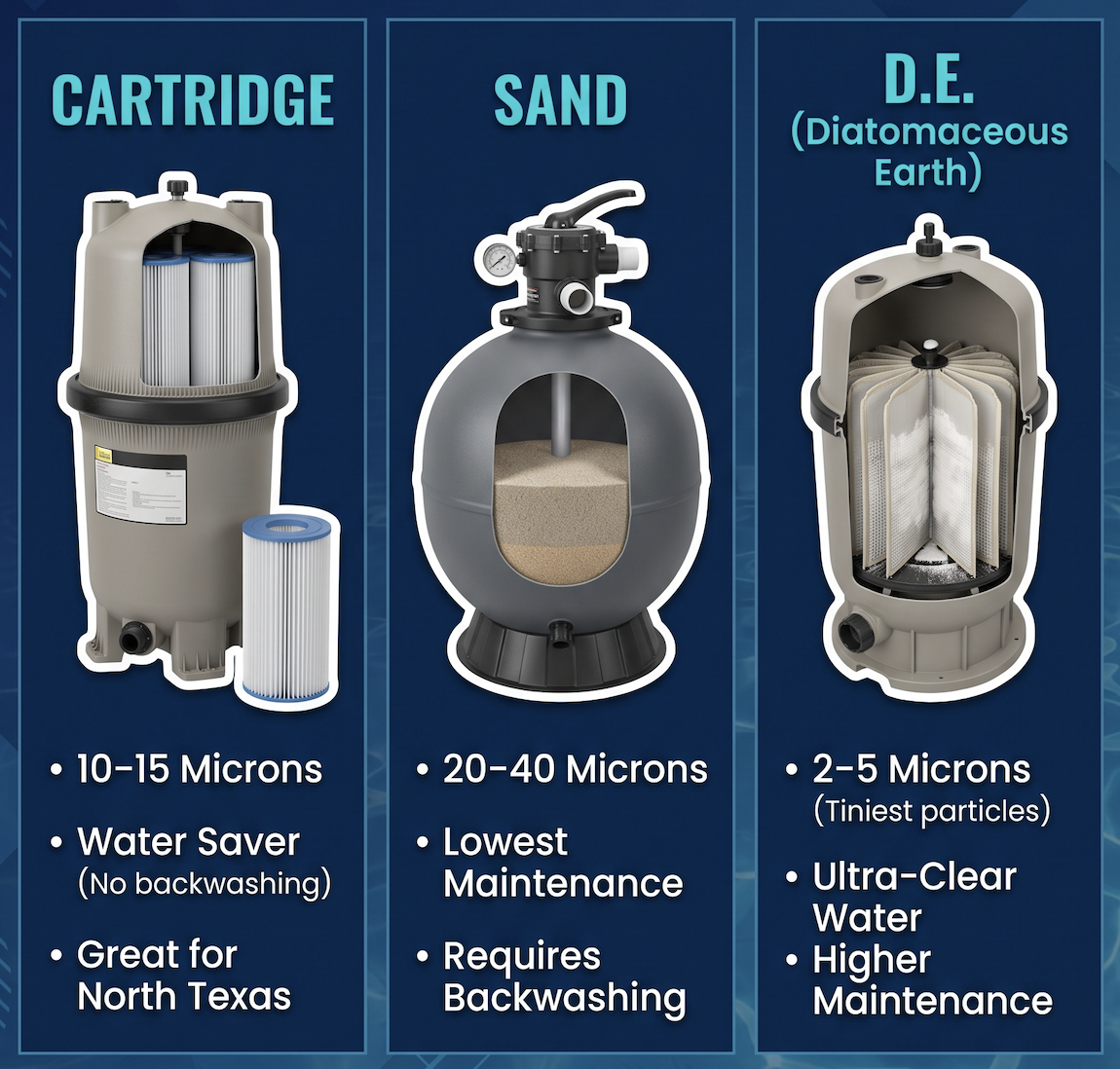
A clean filter pulls out fine particles before they break down and dissolve. A dirty filter lets that material sit in the water and slowly add to the total. Filter cleaning is the single most effective equipment job you can do for water quality.
2. Partial drains and backwashing
Sand and DE owners lose water every time they backwash, which is one of the few upsides of backwashing: it is a small, regular TDS reset. Cartridge owners do not get that automatically, so a partial drain and refill once or twice a year keeps the number in check. Nobody should need to drain a pool fully just to manage TDS.
3. Control debris
Leaves, dirt, pollen, and grass clippings that sit on the bottom break down and dissolve. Skimming, emptying baskets, and brushing every week keep organic material out of the water before it becomes part of the total.
What weekly service does about it
TDS is not something most homeowners measure, but it is behind a lot of “my water tests fine and still looks off” complaints. On weekly service, the filter is kept clean on schedule, debris comes out before it breaks down, and partial water replacement is planned when the readings call for it. If you would rather not track any of this, see our weekly service plans or call or text 817-269-4520 for a satellite-imagery quote.
Frequently asked questions
What are total dissolved solids in a pool?
Total dissolved solids (TDS) is the total amount of everything dissolved in the water, including salts, minerals, chemical byproducts, and what swimmers bring in. It is measured in parts per million with a TDS meter.
Why does my pool water feel sticky?
High total dissolved solids. As water evaporates, the solids stay behind and the water concentrates, which gives it a slick or sticky feel even when chlorine and pH test normal.
How do you lower TDS in a pool?
The only way to lower TDS is to remove some water and replace it with fresh water, through backwashing or a partial drain and refill. A clean filter and weekly debris removal slow how fast it climbs.
What is a normal TDS level for a pool?
Fresh tap water reads around 40 ppm and a typical backyard pool reads several hundred ppm. The number naturally rises over time; salt pools read much higher because the salt itself counts toward the total.
Does evaporation raise TDS?
Yes. Evaporation removes only water and leaves every dissolved solid behind. Topping off with tap water adds more minerals, so the total climbs a little with every cycle.