Skip to content


You add chlorine, and by the next day it’s gone. It’s one of the most frustrating — and common — pool problems in North Texas, and it almost always has a specific, fixable cause. Here’s why your pool keeps burning through chlorine and how to get it holding again. Noah’s Pool Service runs into this constantly and keeps water stable through the summer.
The most common reasons chlorine disappears
1. Low stabilizer (cyanuric acid)
Cyanuric acid (CYA) is sunscreen for your chlorine. Without enough of it, the Texas sun destroys chlorine within hours — you can lose most of it in a single afternoon. Low CYA is the number-one reason outdoor pools won’t hold chlorine. Too much CYA causes its own problems, so the goal is a balanced range, not just “more.”
2. The sun itself
Even with proper stabilizer, our long, intense summer days burn off chlorine faster than cooler climates. That’s why adding chlorine in the evening and running the pump at night is more effective than dosing at midday.
3. Organic load and phosphates
Sweat, sunscreen, leaves, pollen, and pet dander all consume chlorine as it does its job. Phosphates — which wash in from fertilizer, rain, and debris — feed algae, and a growing algae bloom will eat chlorine faster than you can add it, often before the water even looks green.
4. Hidden algae
If your chlorine vanishes and the water is dull or slightly cloudy, you may be fighting algae you can’t see yet. That’s a chlorine demand that won’t quit until the algae is killed — see our guide on why pools turn green and how to clear them.
How to fix it
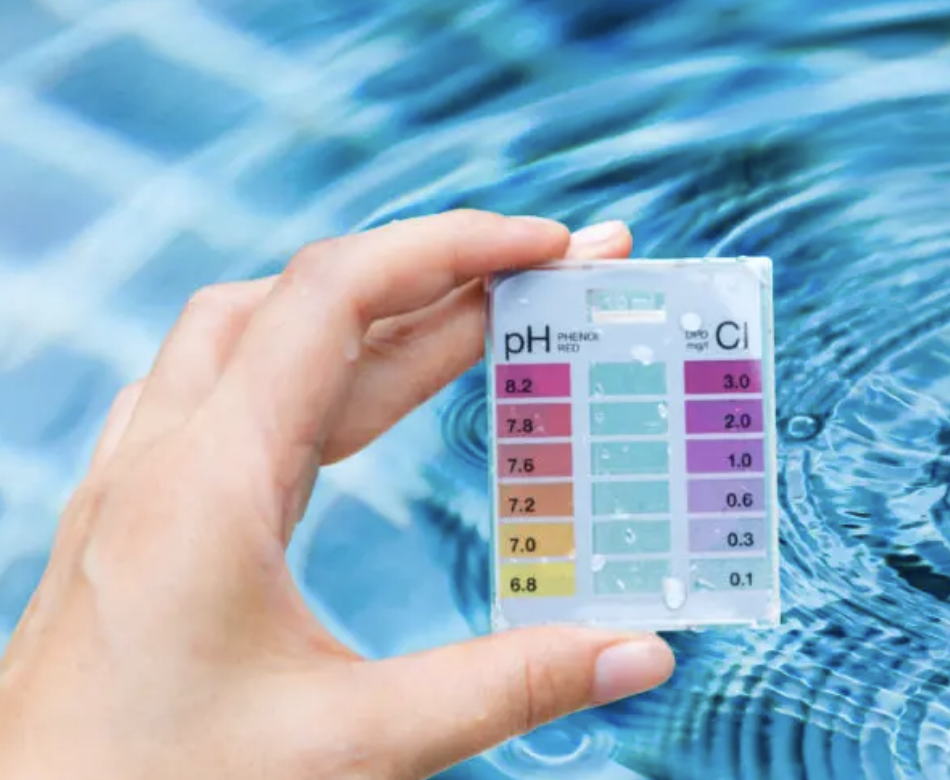
Start by testing your stabilizer (CYA) and bringing it into range — that alone solves most “won’t hold chlorine” cases. Then balance pH and alkalinity, shock the pool to clear out organics and any early algae, and keep the pump running enough hours a day for good circulation. If chlorine still won’t hold after that, a phosphate treatment or a closer look for hidden algae is the next step.
Chasing chlorine week after week is exactly the kind of thing weekly service solves — steady testing and balancing keep the water from ever falling that far behind.
Frequently asked questions
Why won’t my pool hold chlorine?
The most common cause is low cyanuric acid (stabilizer), which lets the sun destroy chlorine within hours. Other causes are high organic load, phosphates feeding algae, and hidden early algae. Test and correct your stabilizer first, then balance the water and shock the pool.
What is cyanuric acid and why does it matter?
Cyanuric acid (CYA), or stabilizer, protects chlorine from being destroyed by sunlight. Without enough of it, an outdoor Texas pool can lose most of its chlorine in a single afternoon. The goal is a balanced range — too little or too much both cause problems.
Why does my pool use so much chlorine in summer?
Intense sun, high water temperatures, heavy swimmer load, and organic debris all speed up chlorine consumption. Proper stabilizer, evening dosing, good circulation, and regular shocking all help chlorine last longer.
Can algae make my pool lose chlorine?
Yes. A growing algae bloom creates a heavy chlorine demand and can consume chlorine faster than you add it — sometimes before the water visibly turns green. Killing the algae with a shock restores your ability to hold chlorine.
How do I get my pool to hold chlorine again?
Test and correct cyanuric acid, balance pH and alkalinity, shock the pool to clear organics and early algae, and run the pump enough hours a day. If it still won’t hold, treat phosphates or look for hidden algae.