Skip to content
If you’ve noticed a chalky white or grayish crust creeping along your waterline tile, you’re seeing one of the most common pool problems in our area: calcium scale. North Texas has notoriously hard water — high in dissolved minerals — and pools take the brunt of it. Here’s why it happens, how to get rid of it, and how to keep it from coming back. Noah’s Pool Service deals with this on Fort Worth-area pools every week.
Why North Texas pools get calcium buildup
Hard water is water loaded with dissolved minerals, mostly calcium and magnesium. Our region’s water supply runs hard, and a pool makes the problem worse in two ways: water constantly evaporates in the Texas heat, leaving the minerals behind and concentrating them, and high pH or alkalinity pushes that calcium out of solution so it deposits on surfaces. The result is scale — that white, crusty film on your tile, and sometimes a rough, sandpapery feel on plaster.
There are two types worth knowing. Calcium carbonate is the more common, flaky white scale that responds to cleaning and better water balance. Calcium silicate is a harder, grayer deposit that builds more slowly and usually needs professional attention. Telling them apart matters, because they don’t come off the same way.
How to remove calcium from pool tile
For light calcium carbonate scale, a few approaches help:
- A pumice stone works on tile (never on plaster or vinyl) with some elbow grease.
- Purpose-made tile scale removers break down light buildup.
- For heavier or widespread scale, professional bead blasting removes it without damaging the tile.
Calcium silicate — the harder gray deposit — generally won’t budge with a pumice stone and is a job for a professional. Trying to force it off can scratch or chip your tile, so it’s worth getting the right diagnosis first.
How to prevent it in the first place
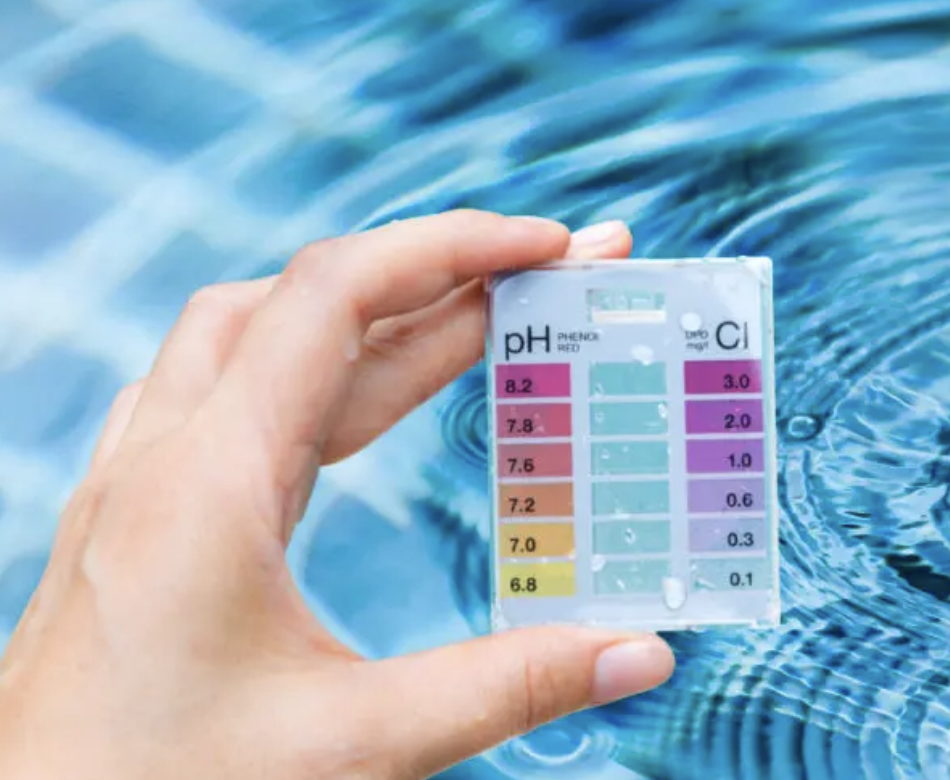
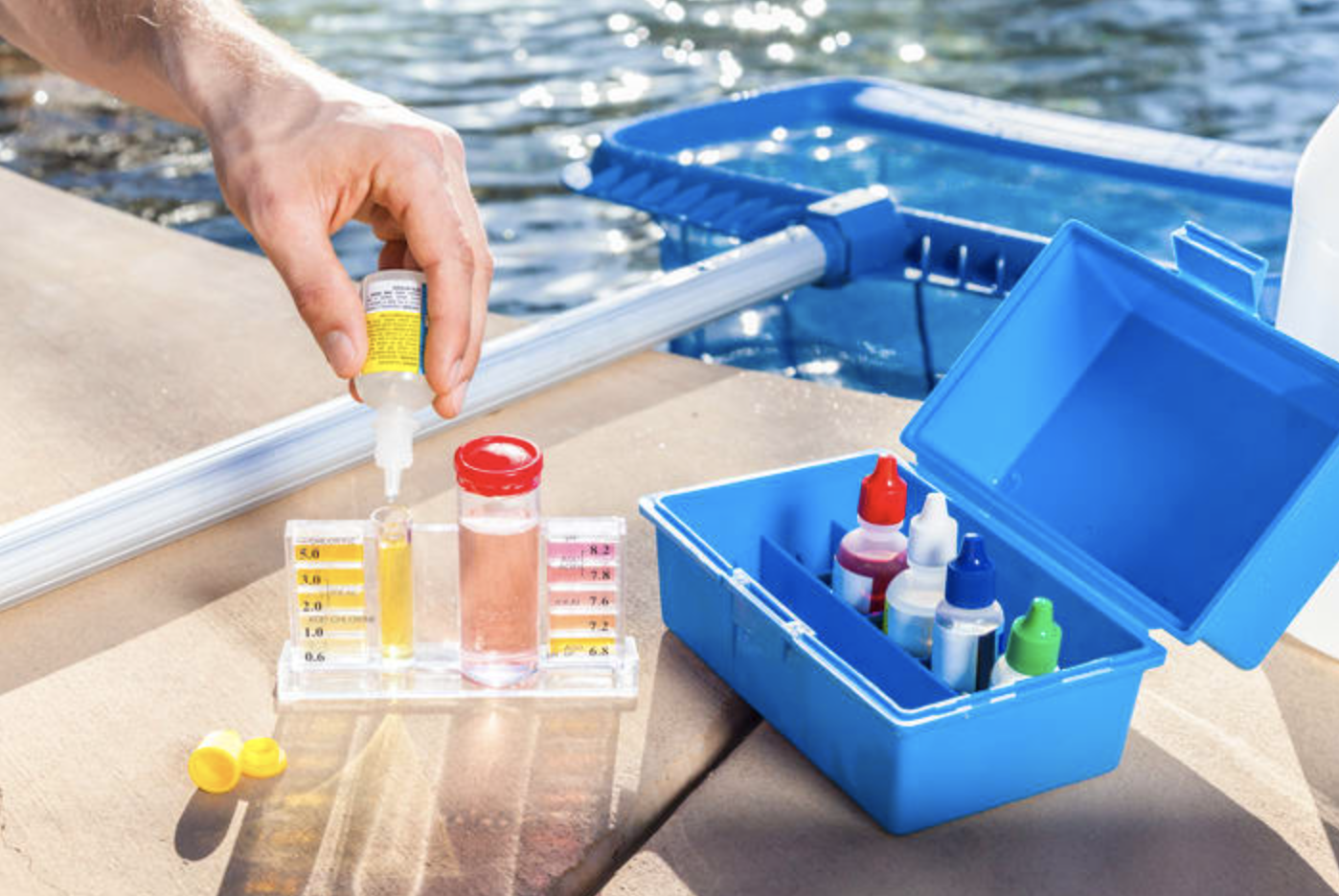
Removal is the hard part; prevention is mostly about consistency. The keys are keeping your pH and total alkalinity in range so calcium stays dissolved, watching your calcium hardness level, topping off the water so minerals don’t over-concentrate through evaporation, and brushing regularly. None of that is complicated — but it has to happen consistently, which is exactly where weekly service earns its keep.
Because we test and balance your water every visit and brush the surfaces each week, scale never gets the steady, unbalanced conditions it needs to take hold. It’s the same reason weekly care prevents algae and protects your equipment — you can read more in our complete guide to pool cleaning. If your tile is already scaled over, reach out and we’ll take a look.
Frequently asked questions
Why does my pool get calcium buildup?
North Texas has hard water — high in dissolved calcium and magnesium. As pool water evaporates in the heat, those minerals concentrate, and when pH or alkalinity runs high the calcium comes out of solution and deposits on your tile and surfaces as white or gray scale.
How do I remove calcium from pool tile?
Light, flaky white scale (calcium carbonate) can often be removed with a pumice stone on tile or a purpose-made tile scale remover. Heavier buildup usually needs professional bead blasting. Harder gray deposits (calcium silicate) generally require professional removal — a pumice stone won’t take them off without risking damage.
What’s the difference between calcium carbonate and calcium silicate scale?
Calcium carbonate is the more common flaky white scale that responds to cleaning and better water balance. Calcium silicate is a harder, grayer deposit that builds slowly and usually needs professional attention. They don’t come off the same way, so it helps to identify which you have first.
How do I prevent calcium buildup on my pool?
Keep your pH and total alkalinity in range so calcium stays dissolved, monitor calcium hardness, keep the water topped off so minerals don’t over-concentrate, and brush surfaces regularly. Consistent weekly service is the most reliable way to keep those conditions steady.
Does weekly pool service prevent calcium scale?
It helps a great deal. Weekly testing, balancing, and brushing keep water chemistry from drifting into the range where calcium deposits form, so scale is far less likely to build up in the first place.